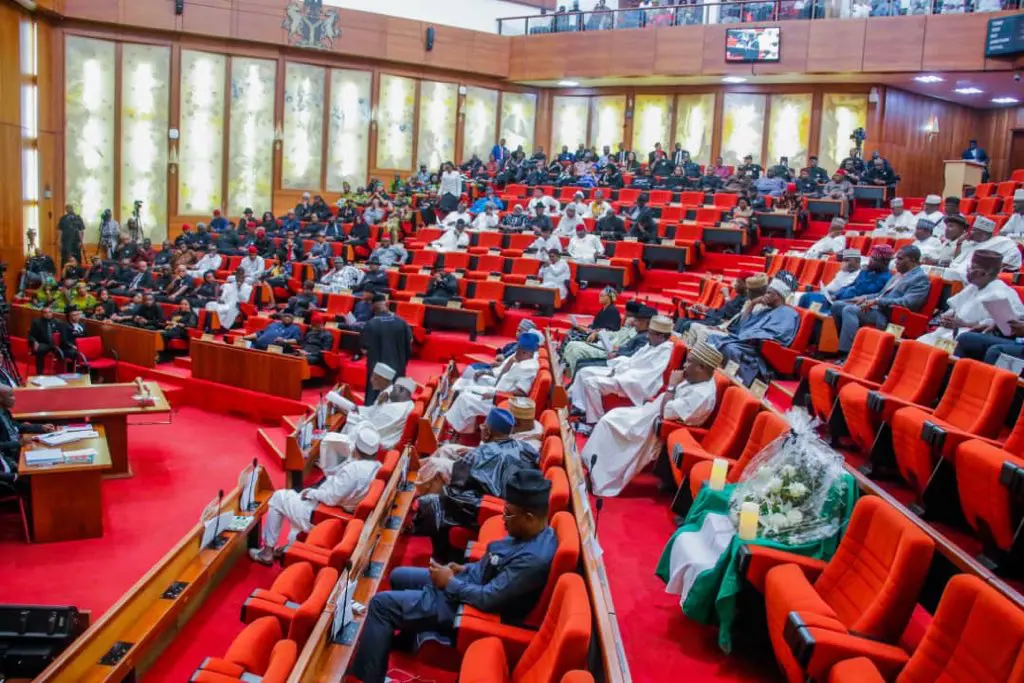
The Nigerian Senate has provided an explanation for the decision to remove the “real-time” transmission clause from the 2026 Electoral Bill, a move that has generated widespread discussion and concern about electoral transparency. Senator Opeyemi Bamidele, representing the Ekiti State District, clarified the reasons for the amendment in a statement issued through his Directorate of Media and Public Affairs. The removal of the “real-time” requirement from Clause 60(3) of the bill has raised questions about the future of electronic voting and the integrity of Nigeria’s elections. Bamidele addressed these concerns by detailing the Senate’s considerations regarding Nigeria’s infrastructure challenges, particularly in terms of internet connectivity and power supply.
Understanding the Controversy:
Clause 60(3) of the 2026 Electoral Bill initially mandated that election results be transmitted electronically from each polling unit to the Independent National Electoral Commission (INEC) Result Viewing Portal (IReV) “in real time.” This provision was hailed by many as a step forward for transparency and electoral credibility. However, the Senate voted to reject this clause, opting to preserve the electronic transmission of results without the “real-time” aspect.
Senator Bamidele defended the decision, describing the proposal as a “noble initiative” that any global legislature would typically support. Yet, he stressed that the Senate’s decision was rooted in pragmatic considerations, particularly Nigeria’s infrastructural limitations. The removal of “real time” was not intended to undermine the integrity of the election process but to ensure the law was aligned with the country’s current technological and power capabilities.
Infrastructural Challenges:
One of the main reasons cited for this amendment was the state of Nigeria’s infrastructure. Bamidele referenced data from the Nigerian Communications Commission (NCC) to highlight the country’s ongoing broadband and internet penetration challenges. According to the NCC, in 2025, Nigeria’s broadband coverage stood at approximately 70%, while internet penetration was only 44.53% of the population. These figures reflect the significant gap between Nigeria’s digital ambitions and the current reality on the ground.
Further complicating the situation, the Speedtest Global Index ranked Nigeria 85th out of 105 countries in terms of mobile network reliability and 129th out of 150 countries in fixed broadband reliability. The report revealed that Nigeria’s mobile network speed stood at a mere 44.14 megabits per second (mbps), a far cry from the 691.76 mbps in the UAE and 573.53 mbps in Qatar. Similarly, Nigeria’s fixed broadband speed of 33.32 mbps ranked the country 129th globally, while top performers like Singapore and the UAE boasted speeds of over 400 mbps.
These figures were a significant concern for lawmakers, who worried that mandating real-time results transmission could strain the existing network infrastructure and disrupt the electoral process, especially in remote areas with limited internet access.
Power Supply and Its Impact on Technology:
In addition to internet connectivity issues, Bamidele pointed out that approximately 43% of Nigerians—around 85 million people—lack access to reliable grid electricity. This shortage speaks volumes about the state of Nigeria’s power infrastructure, which has long been a barrier to the country’s technological and economic growth.
Bamidele explained that Nigeria’s electricity generation capacity is currently between 12,000 and 13,500 megawatts, but due to challenges in distribution and transmission, only about 4,500 megawatts actually reaches households nationwide. While the passing of the Electricity Act of 2025 is expected to lead to improvements in the power sector, Bamidele cautioned that the existing infrastructure is not yet robust enough to support the high demand that would come with real-time data transmission during elections.
This power shortfall, coupled with the lack of adequate internet connectivity in many regions, made the prospect of real-time transmission of election results seem impractical. Bamidele stressed that forcing such a measure under the current conditions could lead to instability in the electoral process and undermine public confidence.
A Call for Rational Decision-Making:
Bamidele emphasized that the Senate’s decision was based on an objective analysis of Nigeria’s capabilities, not on emotional or political pressure. He argued that as elected representatives, lawmakers have a duty to consider the real-world challenges facing the country rather than succumb to public sentiment. While the desire for a transparent electoral process is undeniable, the reality is that Nigeria’s infrastructure is still evolving, and enforcing overly ambitious policies could lead to setbacks rather than progress.
The removal of “real-time” from the bill, according to Bamidele, was a practical step to ensure that the electoral framework was grounded in the country’s current technological and power infrastructure. By still allowing for the electronic transmission of results, the Senate aimed to ensure that the election process remained transparent, but without overburdening the existing systems.
Senate’s Long-Term Vision:
Looking ahead, Bamidele noted that the Senate was committed to enhancing Nigeria’s electoral system and addressing the challenges that had led to the removal of “real-time” transmission. He pointed to the ongoing efforts to improve broadband infrastructure and expand electricity access as part of the broader vision to modernize the country’s election systems.
Despite the current limitations, the Senate’s decision leaves room for future reforms. Bamidele highlighted that as Nigeria’s infrastructure improves, it would be possible to revisit the idea of real-time result transmission in the future. For now, however, the focus is on ensuring that the 2026 elections are conducted smoothly, transparently, and in a way that is realistic given the country’s infrastructure challenges.
Public Concerns and Reactions:
While Bamidele’s statement sought to clarify the Senate’s reasoning, public reactions to the decision have been mixed. Many citizens and civil society groups who had hoped for real-time transmission to increase electoral transparency were disappointed by the amendment. These groups argue that removing “real-time” undermines the spirit of progress and transparency that the current electoral reforms sought to promote.
However, others have expressed understanding, acknowledging that Nigeria’s infrastructure still faces significant hurdles. Some have even suggested that the focus should now shift to ensuring that the electronic transmission of results is secure, tamper-proof, and accessible, rather than solely focusing on the timing of transmission.