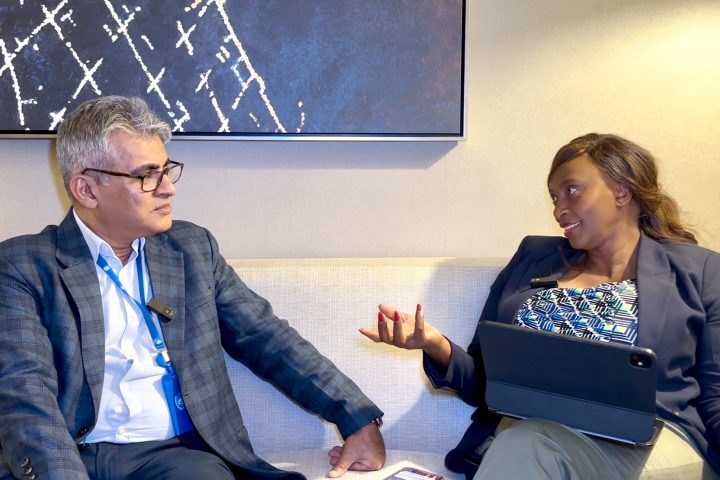
As geopolitical competition intensifies across the Indian Ocean and disruptions from the Red Sea to the Gulf continue to reshape global logistics corridors, Mauritius is steadily emerging as a strategically important diplomatic stabilizer linking Africa with the Indo-Pacific. In a recent WorldAffairs Exclusive Interview, Deputy Minister of Foreign Affairs, Regional Integration and International Trade Rajen Narsinghen outlined how Mauritius is advancing a calibrated strategy built on neutrality, maritime cooperation, diversified trade partnerships, and renewable-energy transition. Together, these priorities reflect the expanding agency of small but strategically positioned states in shaping what analysts increasingly describe as the Indian Ocean century.
Significantly, the interview conducted by WorldAffairs Editor-in-Chief Dr. Shahid Siddiqui, serves as an important policy-level exposition of Mauritius’ evolving strategic outlook at a time when smaller maritime states are becoming central actors in regional stabilization. The conversation offers rare insight into how Mauritius is navigating an increasingly fragmented geopolitical environment while preserving diplomatic flexibility across competing strategic spheres.
The discussion provides a structured window into how Mauritius interprets the emerging maritime order not as a theatre of confrontation but as an opportunity for connective diplomacy. At a moment when great-power competition is reshaping sea-lane security architectures across the Indo-Pacific, Mauritius is positioning itself as a neutral intermediary capable of sustaining partnerships simultaneously with Western partners, Asian economic powers, and African regional institutions. This approach described as a “diplomacy of equilibrium”, reflects deliberate strategic intent rather than passive neutrality.
Mauritius’ positioning is particularly visible in its maritime security outlook. Instability affecting shipping corridors from the Gulf through the Red Sea continues to expose structural vulnerabilities in global supply chains. Rather than aligning exclusively with any single security framework, Mauritius is presenting itself as a maritime stabilizing platform advocating freedom of navigation while maintaining cooperative engagement with multiple stakeholders responsible for safeguarding Indian Ocean sea lanes. Its pragmatic position on the continued operation of the strategic facility at Diego Garcia, alongside its sovereign claim over the Chagos Archipelago, illustrates a sophisticated effort to reconcile national interests with regional security realities.
At the institutional level, Mauritius is expanding its influence through structured maritime diplomacy. Engagement with the Indian Ocean Rim Association and the Indian Ocean Commission reflects a deliberate strategy to strengthen cooperative governance mechanisms rather than participate in competitive security alignments. These platforms allow Mauritius to contribute to maritime domain awareness, disaster-response coordination, and Blue Economy cooperation areas increasingly central to the future architecture of Indian Ocean governance.
Equally significant is Mauritius’ recognition that supply-chain resilience has become a geopolitical imperative rather than merely an economic concern. Disruptions affecting northern maritime corridors have accelerated efforts to deepen trade connectivity through southern regional frameworks such as the Southern African Development Community and the Common Market for Eastern and Southern Africa, while preserving structured access to Western markets through arrangements including the African Growth and Opportunity Act. This layered diversification strategy reflects Mauritius’ attempt to reduce exposure to chokepoint vulnerabilities while reinforcing its gateway role into African growth corridors.
Participation in the African Continental Free Trade Area further strengthens Mauritius’ ambition to function as a regulatory and financial bridge linking Asian capital flows with African markets. Within the evolving architecture of Afro-Asian connectivity, Mauritius is positioning itself not merely as a logistics node but as a structuring hub for cross-regional investment flows operating across multiple legal and institutional frameworks.
Perhaps the most strategically consequential element of Mauritius’ approach lies in its simultaneous engagement with both India and China. Rather than treating these relationships as mutually exclusive, Mauritius is pursuing complementary partnerships across maritime security cooperation, infrastructure development, and trade connectivity. Cooperation with India strengthens surveillance capacity across Mauritius’ Exclusive Economic Zone, while Chinese engagement supports infrastructure expansion and integration into wider production networks. This dual engagement reflects a broader recognition that influence in the Indian Ocean century will increasingly depend on connectivity leverage rather than alignment rigidity.
Energy transition represents another pillar of Mauritius’ evolving geopolitical positioning. Global volatility in fossil-fuel markets has reinforced the vulnerability of island economies to external shocks, encouraging Mauritius to accelerate investments in solar energy, biomass, and emerging ocean-based renewable technologies. By positioning itself as a regional testing platform for scalable clean-energy solutions, Mauritius is transforming structural vulnerability into strategic opportunity.
Climate diplomacy further enhances Mauritius’ international profile. Through engagement with the Alliance of Small Island States and the United Nations system, Mauritius continues to advocate adoption of a multidimensional vulnerability index that more accurately reflects the structural risks confronting Small Island Developing States. This agenda enables Mauritius to exercise normative influence disproportionate to its economic size while strengthening its credibility across Global South climate negotiations.
Taken together, the policy directions articulated in the WorldAffairs Exclusive Interview represent an important window into Mauritius’ strategic thinking at a time when maritime geopolitics across the Indo-Pacific is entering a decisive phase. Rather than remaining passive observers of great-power rivalry, small island states such as Mauritius are increasingly positioning themselves as coordinators of connectivity, custodians of maritime governance norms, and facilitators of cooperative security engagement.
As maritime competition intensifies across the Indo-Pacific and Africa’s digital and green transformation accelerates, Mauritius’ ability to sustain neutrality while expanding connectivity partnerships may prove to be one of its most valuable strategic assets. The WorldAffairs Exclusive Interview, conducted by Dr. Shahid Siddiqui, demonstrates how policy-level editorial engagement can illuminate emerging strategic thinking from pivotal Global South actors helping shape the future trajectory of the Indian Ocean century.
-David Dzirutwe
READ THE FULL E-MAGAZINE | WorldAffairs: For Decision-Makers Who Need More Than Headlines