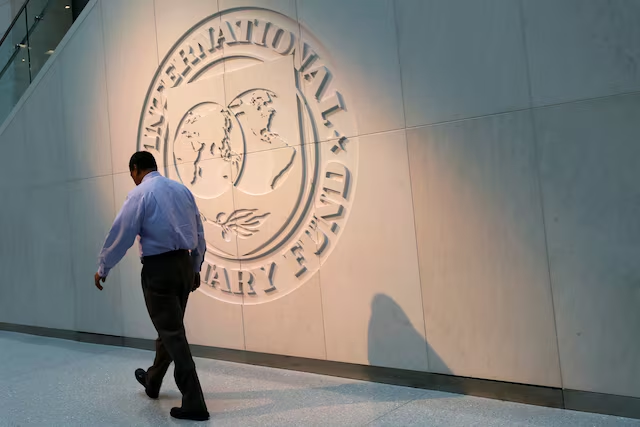
Nigeria IMF loan repayment has been completed. The country cleared $3.4 billion it borrowed in 2020 to ease the economic blow of the COVID-19 pandemic. The International Monetary Fund (IMF) confirmed the repayment on Thursday, calling it a key milestone in Nigeria’s financial recovery.
The IMF granted the loan in April 2020 under its Rapid Financing Instrument. This emergency fund helps countries address urgent balance of payments issues. Nigeria received it when oil prices crashed, slashing national revenue and pushing the economy into recession.
Christian Ebeke, the IMF’s resident representative in Nigeria, stated that “as of April 30, Nigeria had fully repaid the financial support it received under the Fund’s Rapid Financing Instrument.”
Although Nigeria has repaid the loan, it still owes annual fees. Ebeke explained that the country will continue to pay around $30 million each year in Special Drawing Rights (SDR) charges.
According to Nigeria’s Debt Management Office, the country spent $4.66 billion servicing external debt in 2023. Of that amount, $1.63 billion went to the IMF, showing how significant this repayment was.
This Nigeria IMF loan repayment demonstrates the country’s commitment to honoring its international obligations. It also strengthens its reputation with global lenders and investors.
Economists see this as a sign of improved fiscal responsibility. However, they warn that Nigeria still faces major challenges. Inflation remains high, revenue from non-oil sectors is low, and public debt continues to rise.
Experts recommend that Nigeria prioritize reforms to diversify its economy. Reducing dependence on oil will make the country more resilient against global price fluctuations. Stronger domestic industries and improved tax systems can help build lasting stability.
Though repayment of the IMF loan is a major achievement, it does not solve all economic issues. Continued progress depends on strategic planning and bold policy decisions.
Still, the successful Nigeria IMF loan repayment sends a strong message. It shows Nigeria’s willingness to recover from crisis and maintain financial discipline in a tough global economy.