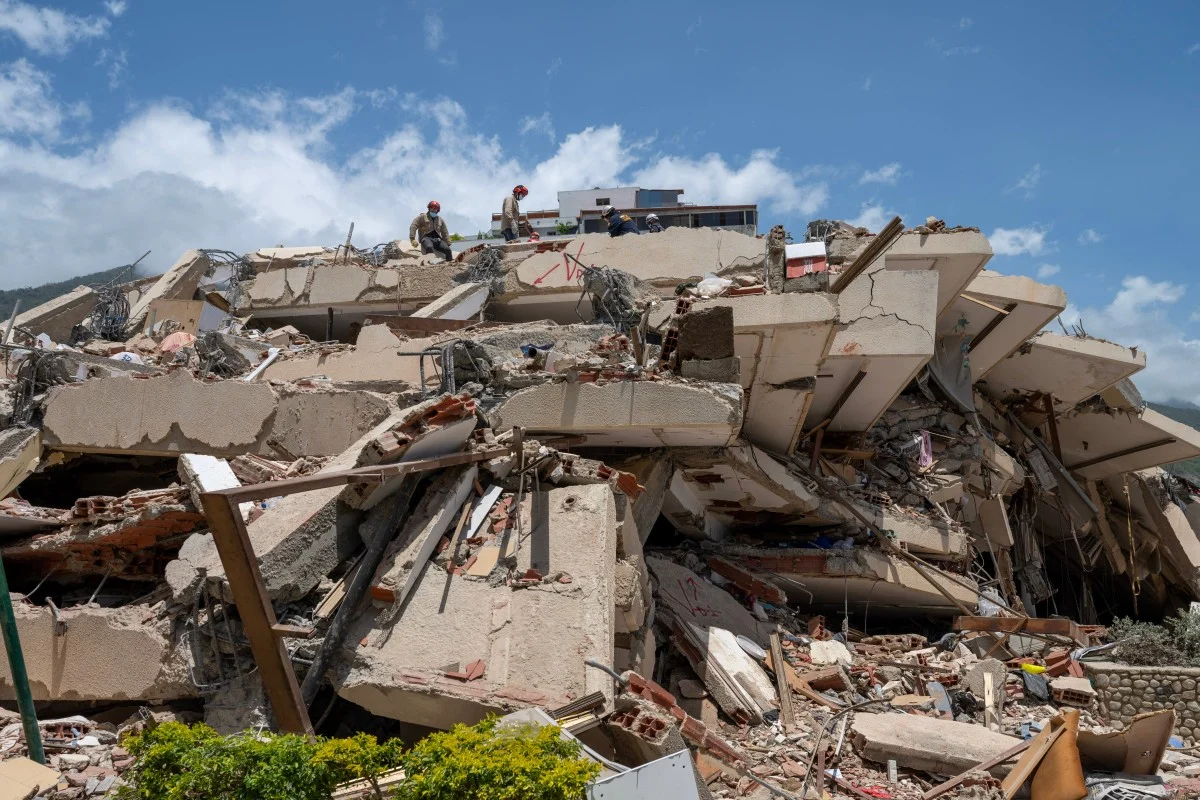
The Venezuela quake has killed at least 1,430 people and injured 3,238 others after twin earthquakes devastated several parts of the South American country.
President of the National Assembly, Jorge Rodríguez, announced the latest casualty figures on Saturday. He also disclosed that 3,142 families lost their homes following the Venezuela quake disaster.
The powerful earthquakes, measuring magnitudes 7.2 and 7.5, struck Venezuela on Wednesday and caused extensive destruction in coastal communities around La Guaira. Buildings collapsed, roads suffered damage and emergency services struggled to reach some affected communities after the Venezuela quake.
Authorities said the country has experienced at least 430 aftershocks since the initial tremors, increasing fears among residents and rescue workers. The continuing Venezuela quake crisis has complicated relief operations and forced many residents to remain outdoors.
Many affected communities remain without adequate shelter, while emergency responders continue efforts to locate survivors trapped beneath collapsed structures. Aid agencies have warned that the first few days after the Venezuela quake are critical for rescue operations.
Venezuela quake death toll climbs
Officials said the Venezuela quake has become one of the deadliest natural disasters in the country’s recent history. The rising number of deaths has placed additional pressure on emergency agencies already facing difficult conditions.
Thousands of residents have been displaced as homes, businesses and public infrastructure suffered severe damage during the Venezuela quake. Families in the worst-hit areas have been forced to seek refuge in temporary shelters, schools and public buildings.
Rescue workers continue to search damaged buildings, although aid agencies warn that the critical window for finding survivors is narrowing. Several communities affected by the Venezuela quake have reported shortages of rescue equipment and emergency personnel.
Meanwhile, residents have joined search operations by removing debris with their hands due to the limited presence of government rescue teams. Community volunteers have played a major role in supporting emergency efforts after the Venezuela quake.
Officials also said many injured residents require urgent medical treatment, placing significant pressure on hospitals and healthcare facilities.
Aftershocks worsen Venezuela quake crisis
Authorities reported more than 430 aftershocks after the twin earthquakes struck the country. These repeated tremors have caused additional damage to weakened buildings and increased fear among residents affected by the Venezuela quake.
Many survivors remain outdoors because they fear damaged structures could collapse during subsequent tremors. Temporary camps have emerged in several communities as people avoid returning to their homes after the Venezuela quake.
Emergency officials have urged residents in affected areas to follow safety guidelines while assessments of damaged structures continue. Engineers and rescue teams are evaluating buildings to determine whether they remain safe.
The aftershocks have also slowed humanitarian operations in several communities. Damaged roads and unstable structures have limited access to locations impacted by the Venezuela quake.
Aid organisations have warned that prolonged displacement could create further humanitarian challenges if shelter, food and medical supplies do not reach affected communities quickly.
International aid reaches affected areas
Relief efforts have intensified as international partners provide assistance to Venezuela following the Venezuela quake. Several countries and humanitarian organisations have begun sending supplies and rescue personnel.
A senior official in the administration of US President Donald Trump said communication with Venezuela’s interim authorities had improved after the disaster.
The official stated that both political and military authorities are coordinating efforts to deliver aid and restore essential services following the Venezuela quake. Emergency teams are also working to improve transportation and logistics networks.
According to the official, emergency logistics operations are expanding to meet urgent humanitarian needs. International agencies have focused on medical assistance, food distribution and emergency shelter.
Several foreign rescue teams have also joined local authorities in search and rescue operations. Their expertise and equipment have helped emergency workers reach collapsed structures more efficiently after the Venezuela quake.
Airport operations support relief efforts
Officials confirmed that one runway at Simón Bolívar International Airport near Caracas has resumed operations.
The operational runway has allowed humanitarian flights carrying medical supplies, emergency equipment and rescue teams to land in the country. Aid deliveries have increased since airport activities partially resumed after the Venezuela quake.
However, authorities said the second runway remains heavily damaged and unusable due to cracks caused by the earthquakes.
Officials credited cooperation between international partners and Venezuelan authorities for improving airport operations. The restoration of limited air traffic has become essential for ongoing Venezuela quake relief efforts.
The reopening of the runway is expected to speed up the delivery of aid to affected communities and improve coordination among humanitarian organisations.
Medical support and rescue missions expand
Authorities said mobile hospitals have started arriving to support overwhelmed healthcare facilities. Medical teams are treating injured residents and providing emergency services in communities affected by the Venezuela quake.
The United States is also working to deliver additional Starlink terminals to improve communication in disaster zones. Better communication systems are expected to strengthen rescue and relief operations.
Officials said two American search and rescue teams have helped locate survivors trapped beneath collapsed buildings. These teams have contributed specialised equipment and technical expertise to Venezuela quake operations.
The USS Fort Lauderdale has also been deployed to assist relief operations. The vessel will provide medical services, airlift support and logistics coordination.
Officials explained that the ship can transport injured victims, support rescue teams and assist humanitarian operations along affected coastal areas after the Venezuela quake.
Despite these efforts, humanitarian agencies warn that millions of people may still lack access to clean water, sanitation and essential supplies. Concerns about public health are growing as displaced residents remain in temporary shelters.
As rescue and relief operations continue, authorities face mounting pressure to reach isolated communities and provide support to thousands displaced by the Venezuela quake. Emergency agencies and international partners are working to expand assistance while survivors struggle to rebuild their lives after the Venezuela quake.