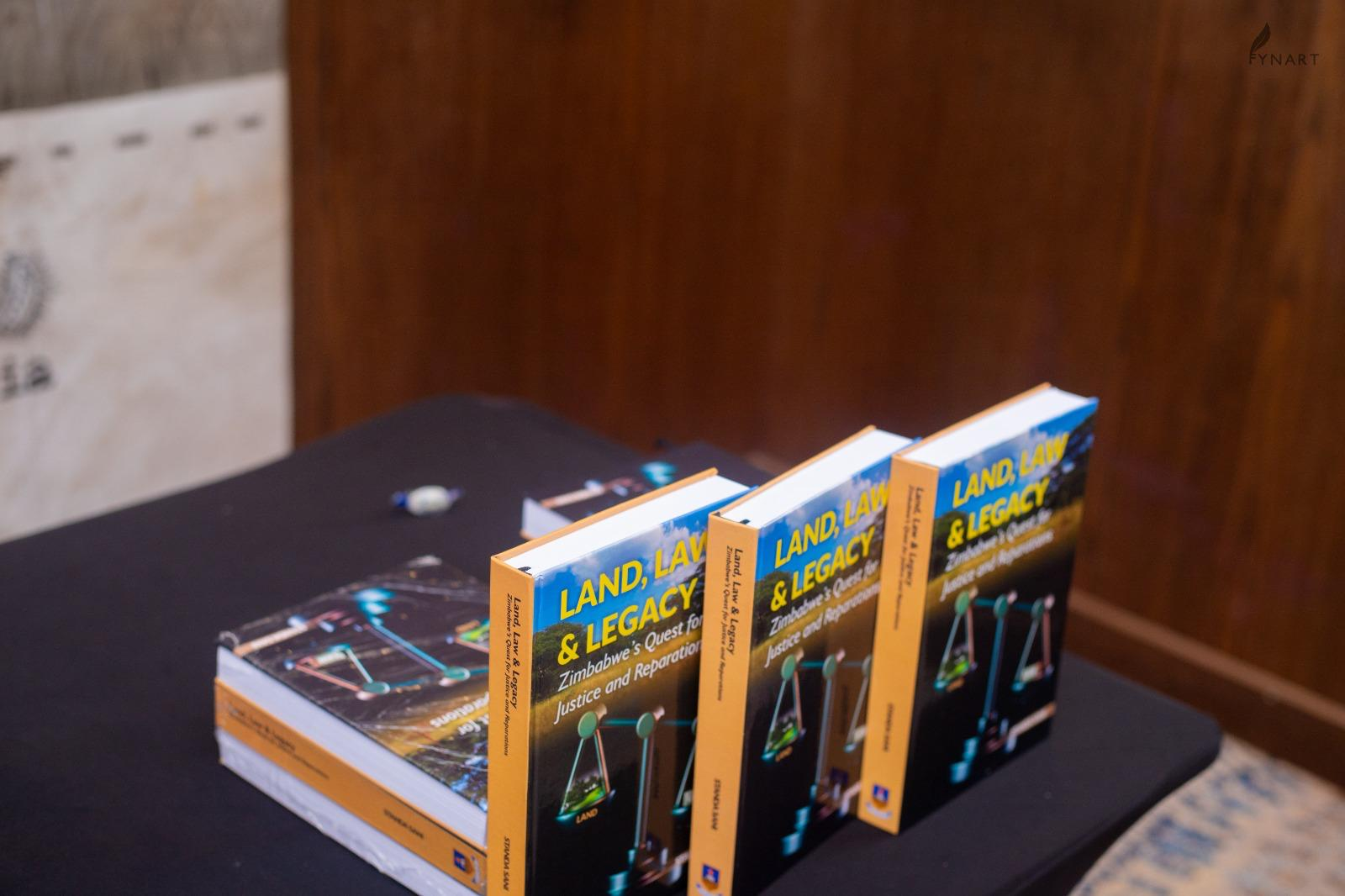
Zimbabwe land justice is the focus of a new book by legal scholar, author and registered legal practitioner Standa Sani, who examines the country’s long-running land question through history, law, morality and reparations.
The book, titled Land, Law & Legacy: Zimbabwe’s Quest for Justice and Reparations, revisits one of the most consequential issues in Zimbabwe’s national story: the dispossession of indigenous communities under colonial rule and the continuing search for redress in the post-independence era.
“Where law has been used to create injustice, justice must begin by questioning the law. Historical injustice is not erased by time; it is either confronted through justice or preserved through legality. Reparations are not about the past alone, but about the future that becomes possible when the past is no longer denied.” — Standa Sani.
Sani’s work presents the land question as more than a dispute over ownership. It treats land as a matter of dignity, identity, economic participation, historical accountability and national healing. Through legal research and historical inquiry, the book explores how colonial laws created racial inequality in land ownership and how those inequalities continue to shape debates about justice today.
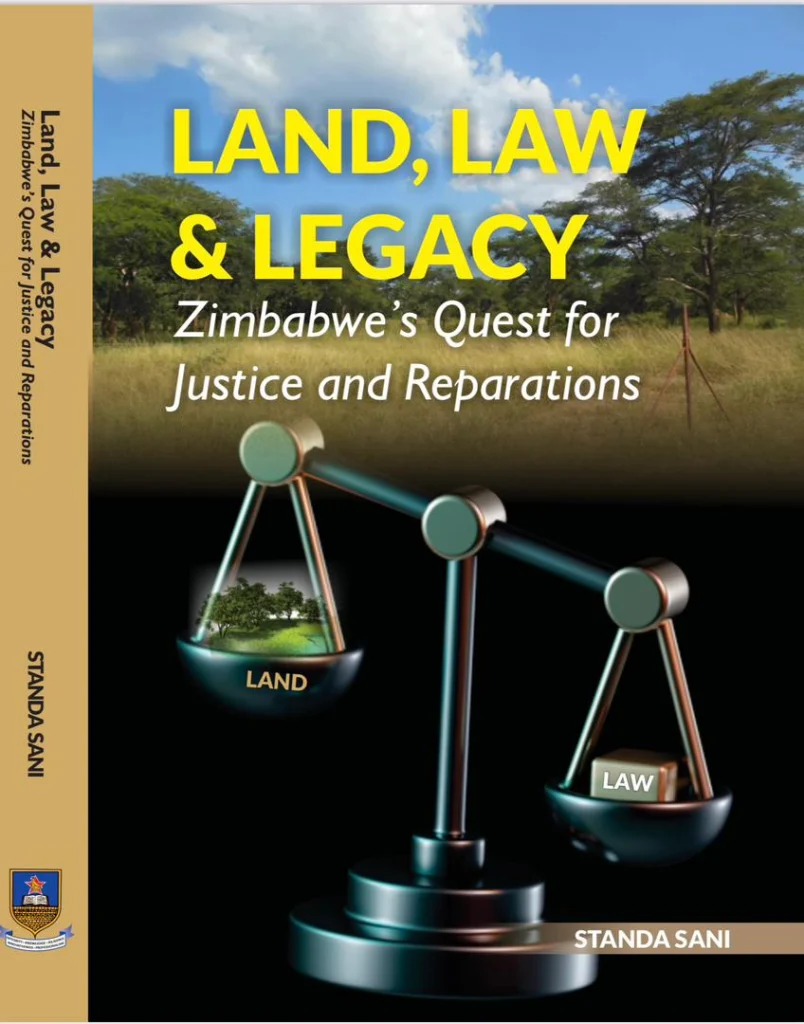
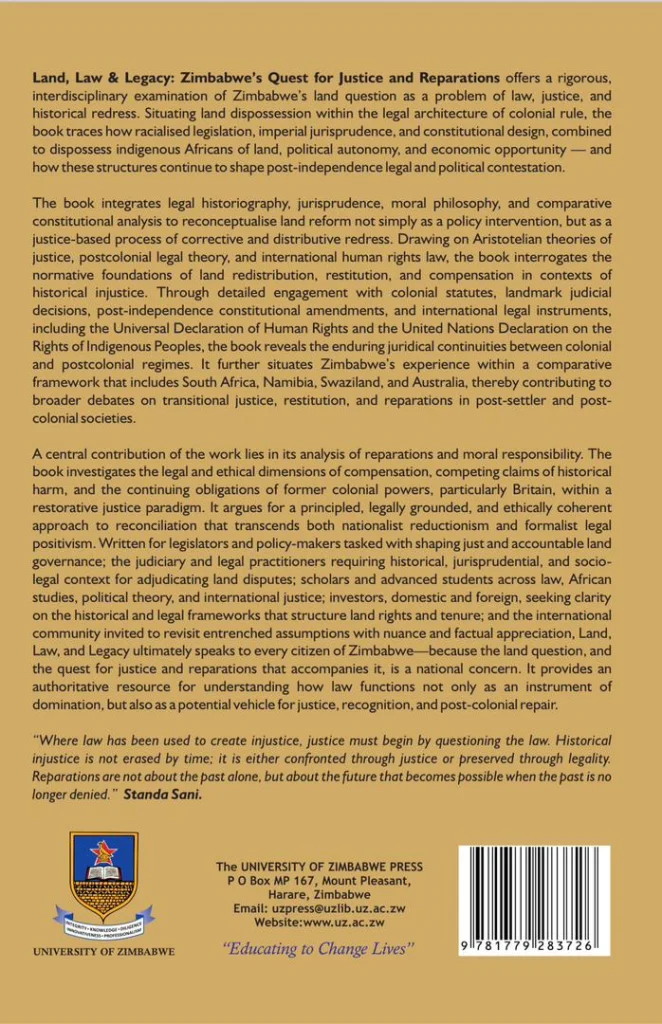
At a time when reparations and colonial accountability are gaining renewed attention across Africa and the wider world, Land, Law & Legacy adds a Zimbabwean legal voice to the conversation. It asks how societies can respond to historical wrongs in ways that are fair, honest and sustainable.
A Legal Account of How Land Was Taken
A central part of the book examines the laws that structured land dispossession in colonial Zimbabwe.
Sani analyses key pieces of colonial legislation, including the Land Apportionment Act of 1930, the Native Land Husbandry Act of 1951 and the Land Tenure Act of 1969. These laws helped formalise racial segregation and unequal land ownership, giving legal force to a system that placed indigenous Africans at a severe disadvantage.
The book argues that colonial dispossession was not only achieved through military conquest or political domination. It was also organised through legal instruments, administrative systems and court processes that gave the appearance of legality to historical injustice.
By focusing on law, Sani shows how deeply the land question is embedded in Zimbabwe’s legal and political foundations. The book encourages readers to understand land reform not’s legal and political foundations. The book encourages as an isolated event, but as a response to a long history of exclusion built into the colonial legal order.
The work also discusses the importance of the Privy Council judgment and other legal developments that influenced Zimbabwe’s land tenure system. This gives the book particular relevance for lawyers, legal scholars and students of land law.
Why Land Remains a Defining National Issue
Land has remained central to Zimbabwe’s national life because it carries meaning beyond economic value.
For many communities, land is tied to ancestry, family history, cultural identity and belonging. It is also connected to food security, rural livelihoods, wealth creation and political sovereignty. That combination makes the land question one of the most powerful and sensitive issues in Zimbabwe.
Land, Law & Legacy argues that the effects of colonial land dispossession did not end with independence. Unequal ownership patterns, historical grievances and unresolved questions of redress continued to shape the country’s development path.
Sani’s book therefore places land at the centre of national reconstruction. It asks whether a country can truly achieve reconciliation while the historical foundations of dispossession remain insufficiently addressed.
This approach gives the publication wider significance. It is not only a study of Zimbabwe’s past. It is also a reflection on the conditions needed for a more just future.
Reparations as Recognition, Repair and Responsibility
One of the book’s major themes is reparations.
Sani examines reparations not merely as a financial question, but as a broader moral and legal issue. The book links reparations to recognition of harm, accountability for injustice, restoration of dignity and the creation of fairer social and economic conditions.
This is an important distinction. In many public debates, reparations are often reduced to compensation. Land, Law & Legacy presents a wider view. It suggests that meaningful reparations may involve acknowledgement, institutional responsibility, policy support, legal reform and practical measures to address the consequences of dispossession.
The book also draws on philosophical ideas, including Aristotelian principles of justice, to explore what fairness requires after historical wrongdoing. It asks whether justice can be complete if those who benefited from colonial systems do not acknowledge the damage those systems caused.
By placing Zimbabwe within the global reparations debate, Sani connects the country’s land question to wider struggles over colonial memory, racial injustice and historical repair.
Britain’s Role in the Land Question
A significant argument in the book concerns Britain’s role in Zimbabwe’s land history.
Sani contends that Britain bears moral and historical responsibility for the consequences of colonial land policies, racial segregation and the subjugation of indigenous African communities. The book presents colonial land dispossession as a structured system that was enabled by imperial power and law.
This argument is likely to be one of the most discussed aspects of Land, Law & Legacy. It speaks directly to long-standing debates about Britain’s obligations in relation to Zimbabwe’s land reform process and the wider question of colonial accountability.
The book does not treat Britain’s role as a narrow diplomatic issue. Instead, it frames it as part of a moral and historical conversation about responsibility. If colonial policies created enduring harm, the book asks, what form should acknowledgement and redress take today?
By raising these questions, Sani contributes to a wider debate taking place across former colonies, where communities continue to call for recognition of historical injustice and meaningful forms of repair.
Reassessing the Fast Track Land Reform Programme
Land, Law & Legacy devotes substantial attention to Zimbabwe’s Fast Track Land Reform Programme, which began in 2000.
The programme remains one of the most debated developments in Zimbabwe’s post-independence history. It dramatically altered land ownership, displaced many white commercial farmers and reshaped the agricultural sector.
Sani’s book approaches the programme with historical depth. It recognises the long-standing injustices that made land redistribution a central national demand. At the same time, it examines the consequences of the programme for agricultural production, livelihoods, property rights and social relations.
This makes the book valuable because it avoids simple conclusions. It does not separate the Fast Track Land Reform Programme from the colonial history that preceded it. Nor does it ignore the difficult outcomes and policy questions that followed.
By presenting both the historical necessity and the contemporary consequences of land reform, the book encourages a more serious and balanced discussion.
Comparative Lessons From Other Countries
The book also places Zimbabwe’s experience beside land reform and reparations debates in South Africa, Namibia, Eswatini and Australia.
These comparisons show that the challenge of land justice is not unique to Zimbabwe. Many countries with colonial histories continue to face disputes over land ownership, indigenous rights, restitution and historical accountability.
South Africa and Namibia remain central examples because land inequality continues to shape political and economic debate in both countries. Australia adds a wider international dimension, particularly in relation to indigenous dispossession and the recognition of historical harm.
Through these comparisons, Sani demonstrates that land reform requires careful balancing. It must address injustice, but it must also consider productivity, social stability, legal certainty and long-term development.
The comparative approach makes Land, Law & Legacy useful beyond Zimbabwe. It offers lessons for policymakers, researchers and justice advocates in other societies dealing with colonial legacies.
Pan-Africanism and the Wider Liberation Struggle
Sani also situates Zimbabwe’s land question within the wider Pan-African and liberation context.
The book discusses the rise of Pan-Africanism and the role of continental institutions such as the Organisation of African Unity and the African Union. These institutions supported liberation struggles across Southern Africa and helped shape ideas of sovereignty, self-determination and postcolonial justice.
This context is essential because land was one of the central issues in the struggle against colonial rule. For many liberation movements, political independence was inseparable from the demand to reclaim land and restore dignity to dispossessed communities.
By connecting Zimbabwe’s land question to Pan-African history, the book presents land justice as part of a broader African struggle for freedom, ownership and historical correction.
A Contribution to National Healing
Land, Law & Legacy also speaks to the issue of reconciliation.
Sani’s central argument is that historical land dispossession cannot be ignored if Zimbabwe is to pursue meaningful national healing. Reconciliation requires more than moving past difficult history. It requires understanding what happened, acknowledging its consequences and creating pathways toward repair.
The book presents land justice as a foundation for sustainable nation-building. It suggests that unresolved historical grievances can continue to affect trust, development and social cohesion.
This makes the publication especially relevant for public debate. Zimbabwe’s land question is often discussed in political terms, but Sani broadens the discussion by placing it within law, morality and collective memory.
The result is a book that challenges readers to think about how justice can support national stability rather than undermine it.
A Resource for Scholars, Policymakers and Readers
The book is intended for a wide audience.
Legal scholars and practitioners will find detailed analysis of land law, property rights and reparative justice. Policymakers will find historical and comparative insights relevant to land governance and reform. Students will find a useful resource for understanding Zimbabwe’s legal and political history.
General readers will also benefit from the book’s accessible treatment of a complex subject. It explains why land remains one of Zimbabwe’s most important national questions and why debates about reparations continue to matter.
By combining history, law, philosophy and policy analysis, Land, Law & Legacy offers a rounded contribution to public understanding.
Author’s Statement
Sani says the book seeks to support a more informed and balanced understanding of Zimbabwe’s land question.
“This book seeks to contribute to an informed and balanced understanding of Zimbabwe’s land question by examining its historical foundations, legal dimensions, and implications for contemporary justice and reparations discourse,” said Sani.
The statement reflects the book’s purpose. It is not written only to revisit the past. It is written to help readers understand how the past continues to shape present debates about justice, land and national development.
About Standa Sani
Standa Sani is a Zimbabwean legal scholar, author and registered legal practitioner.
His work focuses on constitutional law, land law, succession law, property law, human rights and historical justice. Through his writing and scholarship, he contributes to legal discourse on land governance, reparations and transformative justice in Zimbabwe and beyond.
Land, Law & Legacy: Zimbabwe’s Quest for Justice and Reparations adds to his contribution to one of Southern Africa’s most important legal and historical debates.
Availability
Land, Law & Legacy: Zimbabwe’s Quest for Justice and Reparations is available for purchase through the Faculty of Law, University of Zimbabwe, and directly from the author.
Media, Speaking Engagement and Book Purchase Enquiries
Standa Sani
Email: [email protected]
Email: [email protected]
Conclusion
Land, Law & Legacy: Zimbabwe’s Quest for Justice and Reparations offers a timely and serious examination of Zimbabwe land justice, colonial dispossession and the continuing debate over reparations.
Standa Sani’s book shows that the land question cannot be understood without looking at the legal systems that created inequality, the historical experiences of displaced communities and the moral responsibilities that follow from colonial rule.
By combining legal analysis, historical inquiry, philosophical reflection and comparative study, the book provides a valuable framework for understanding one of Zimbabwe’s most enduring national issues.
Its central message is clear: land justice is not only about ownership. It is about memory, dignity, accountability and the possibility of a fairer national future.