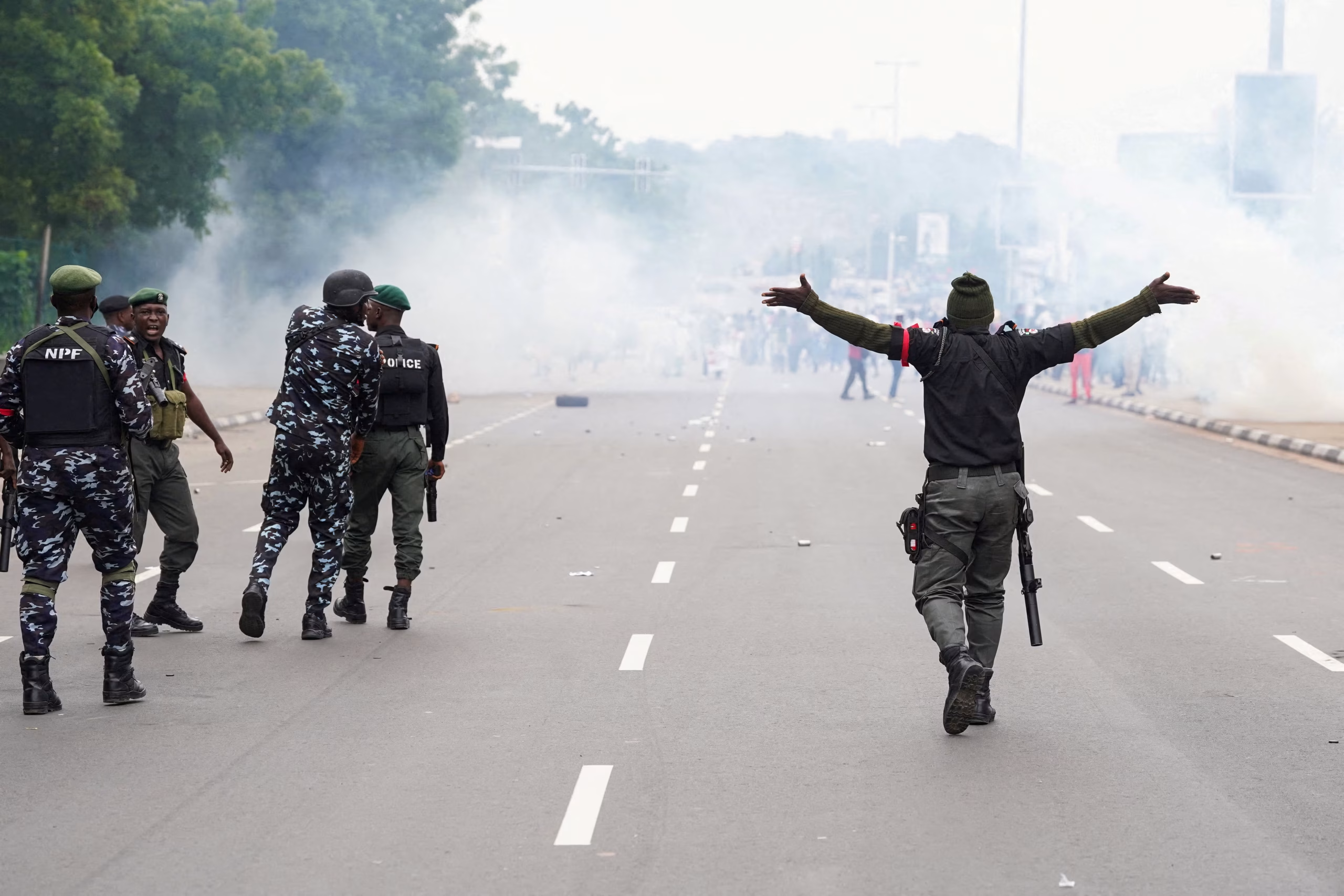
The IPOB Sit-at-Home Order began as a symbolic act of civil disobedience in 2021 but has since evolved into a deadly crisis that has reportedly claimed over 700 lives in southeastern Nigeria. What was initially meant to protest the detention of IPOB leader Nnamdi Kanu soon devolved into a campaign of fear, violence, and lawlessness.
Origins of the Sit-at-Home Order
The Indigenous People of Biafra (IPOB), a secessionist movement advocating for the independence of Biafra, issued the Sit-at-Home directive to demand the release of their detained leader. The order instructed residents of the southeast to stay home every Monday and on key Biafran remembrance days.
Although IPOB claimed the directive was voluntary, armed enforcers began using force to compel compliance—creating a climate of terror and intimidation.
Escalation into Violence
The IPOB Sit-at-Home Order soon morphed from passive resistance into widespread bloodshed. Victims were targeted simply for opening shops, going to work, attending school, or traveling.
Documented Casualties Include:
- Civilians shot for defying the order in cities like Onitsha, Aba, Enugu, and Owerri
- Security personnel ambushed by so-called unknown gunmen
- Students and teachers attacked en route to school
- Bus drivers and traders killed for resuming business
Security reports and local media sources confirm that over 700 individuals have been killed since enforcement of the order turned violent. The true number may be even higher, with several incidents going unreported in remote communities.
The Rise of Armed Enforcers
Groups of masked gunmen—often riding motorcycles or in convoys—became the face of Sit-at-Home enforcement. Many of these attackers are believed to be splinter IPOB factions or criminals exploiting the chaos.
One of the most prominent figures linked to the renewed violent orders is Simon Ekpa, a Finland-based activist who continues to issue Sit-at-Home directives despite IPOB’s official stance against them. His actions have drawn condemnation from the Nigerian government and international observers.
Impact on Everyday Life
The violence linked to the IPOB Sit-at-Home Order has devastated social and economic life in the southeast:
- Economic losses in billions of naira due to business closures
- Schools forced to shut down on Mondays
- Transport companies halted operations to avoid attacks
- Medical access restricted, with hospitals limiting patient visits
- A growing exodus of residents and investors
Entire communities have come to dread Mondays, living in fear of attacks and reprisals for simply attempting to go about their daily lives.
Government Response
The Nigerian government has declared IPOB a terrorist organization and deployed a military crackdown in the southeast. These actions include:
- Joint military-police operations in hot zones
- Arrests of IPOB members and suspected armed enforcers
- Blockades and checkpoints across key roads
Despite this, enforcement remains inconsistent, and many residents feel abandoned or caught between militants and the state.
IPOB’s Denial and Leadership Split
While IPOB’s main leadership insists that they have called off the Sit-at-Home Order, the presence of rogue actors has made enforcement nearly impossible to stop. IPOB spokespeople have repeatedly disavowed the violence, claiming that enemies of the group are orchestrating attacks to tarnish its image.
The internal split between IPOB’s official leadership and Simon Ekpa’s faction has further fragmented control, fueling chaos.
Human Rights and International Concerns
Groups such as Amnesty International and Human Rights Watch have expressed alarm over the worsening human rights situation in southeastern Nigeria. Both IPOB-affiliated militants and Nigerian security forces have been accused of committing abuses, including extrajudicial killings, torture, and arbitrary arrests.
The United Nations and ECOWAS have also called for dialogue and de-escalation, warning that the conflict could further destabilize the region.
The Road Ahead
To end the bloodshed caused by the IPOB Sit-at-Home Order, Nigeria must:
- Facilitate constructive dialogue with community stakeholders
- Restore public confidence in law enforcement
- Rebuild education and commerce in affected regions
- Pursue justice for victims of both state and non-state violence
The federal and state governments must also unite in public messaging, avoiding contradictory statements that confuse residents and embolden violent actors.
What began as a political protest has become a humanitarian and security crisis. The IPOB Sit-at-Home Order, linked to over 700 deaths, reflects the dangers of weaponized activism in a fragile sociopolitical climate. Without urgent and inclusive intervention, the region risks descending further into violence and fear.
For more updates on the southeast security crisis, explore our analysis on Amnesty International brief on Nigeria.