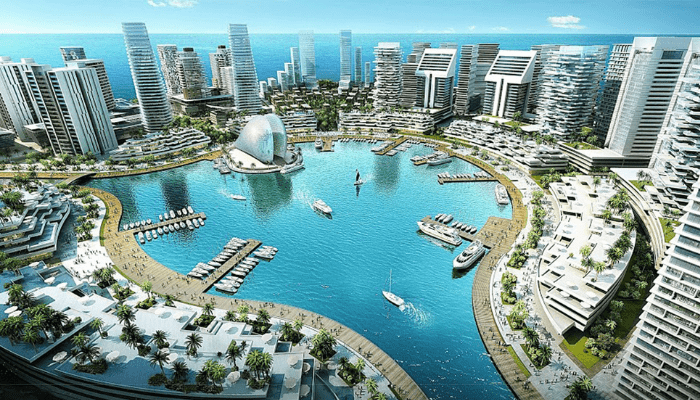
The Lagos real estate boom continues to reshape wealth accumulation across Nigeria. In particular, Eko Atlantic has become a symbol of this transformation. Land that was valued at N180 million in the early 2000s now costs over N2 billion. This surge highlights not just price movement but a broader shift in investment behavior.
Over the last decade, land in Lagos has appreciated without interruption. As a result, investors who acted early have seen incredible returns. For instance, plots in Ibeju-Lekki once sold for N500,000. However, by 2025, similar land now fetches N25 million to N40 million, fueled by major infrastructure projects like the Lekki Free Trade Zone.
Similarly, Lekki Phase 1 experienced dramatic price jumps. In 2005, plots sold for N10–15 million. Today, those same plots command over N400 million to N500 million. Furthermore, Eko Atlantic’s rise to N2 billion per plot reflects its status as one of Africa’s most ambitious urban developments.
This Lagos real estate boom isn’t driven by housing demand alone. Rather, it stems from strategic investment. Many wealthy individuals, both local and in the diaspora, treat real estate as a long-term store of value. Instead of seeking rental income, they focus on asset appreciation. Consequently, property in Lagos has become a financial instrument.
The city’s massive population growth adds fuel to this trend. Lagos now hosts nearly 24 million residents, and over 6,000 new migrants arrive daily. Significantly, half of them choose to stay. As a result, pressure on real estate intensifies, particularly in elite neighborhoods.
Even though Lagos faces infrastructure gaps, luxury homes offer advanced amenities. Features such as smart home automation, swimming pools, private gyms, and backup power are common. For example, Banana Island estates often include helipads and private golf courses. These features cater to elite tastes and justify steep prices.
In terms of design, many luxury homes embrace modern minimalism. Large glass panels, open layouts, and outdoor-indoor transitions dominate. Still, others blend tradition with opulence, using local woods and motifs to add Nigerian character. Regardless of style, these homes signal status and sophistication.
Moreover, location matters. Places like Ikoyi, Victoria Island, and Banana Island aren’t just expensive—they symbolize prestige. Residents enjoy waterfront views, high-end retail, gourmet restaurants, and quick access to business districts. These benefits meet international expectations and attract global investors.
While some homes remain unoccupied, owners aren’t concerned. Instead, they treat them like blue-chip stocks. With each passing year, land becomes more expensive. For investors with patient capital, Lagos offers one of the highest returns on land in Africa.
According to the Roland Igbinoba Real Foundation, this upward trend will likely persist. Each new road, bridge, or development zone pushes prices even higher. Therefore, early buyers stand to gain the most. Delaying entry only increases costs and lowers potential returns.
In conclusion, the Lagos real estate boom has turned land into a premium asset. Eko Atlantic, Ibeju-Lekki, and Lekki Phase 1 are more than just locations—they are investment vehicles. As Lagos continues to expand and attract capital, these areas will remain at the heart of West Africa’s luxury property surge.
READ: The World’s Black Billionaires in 2025: Bizmart List’s Top 21 Wealthiest Entrepreneurs