In a significant development, Nigeria’s defense minister resigns from his post. Mohammed Badaru Abubakar stepped down on health grounds, the presidency announced Monday. His departure coincides with a severe escalation in the nation’s security crisis, marked by a devastating wave of mass kidnappings. Consequently, President Bola Tinubu faces mounting pressure to stabilize a situation that threatens millions of citizens.
A Resignation Amid Rising Insecurity
Presidential spokesperson Bayo Onanuga confirmed the minister’s immediate resignation. He stated that Abubakar quit for health reasons. However, the timing is particularly notable. His resignation comes just as President Tinubu declared a national security emergency. The government promises to detail the scope of this emergency soon.
This high-level departure inevitably raises questions about leadership and strategy during a critical period. Furthermore, it highlights the immense pressure on the administration to deliver tangible security improvements.
The Surging Scourge of Mass Kidnappings
Nigeria has long struggled with kidnappings for ransom, but recent weeks have seen a terrifying surge. Armed bandits, primarily in the northwest and north-central regions, are executing increasingly brazen attacks.
Recent High-Profile Abductions
A series of shocking incidents illustrates the crisis. Most recently, gunmen attacked a church in Kogi state during a Sunday service. They abducted the pastor and nearly a dozen worshippers. Just days earlier, assailants kidnapped about 30 women in Sokoto state. The victims included a bride and her wedding guests.
In total, analysts report nearly 500 people kidnapped across multiple states in a two-week period. This alarming figure underscores the scale of the challenge.
The School Kidnapping Epidemic
Perhaps the most distressing trend involves schools. In late November, armed men abducted 315 people, mostly children, from St. Mary’s private Catholic boarding school in Niger State. While around 50 children later escaped, the trauma and scale of this attack shocked the nation. Sadly, such school kidnappings have become a grim hallmark of the security crisis, exposing the state’s failure to protect its most vulnerable.
Systemic Failures in Security and Response
The government’s struggle to contain this violence stems from deep-rooted systemic issues. Security forces are stretched dangerously thin across multiple fronts.
An Overstretched and Under-Resourced Force
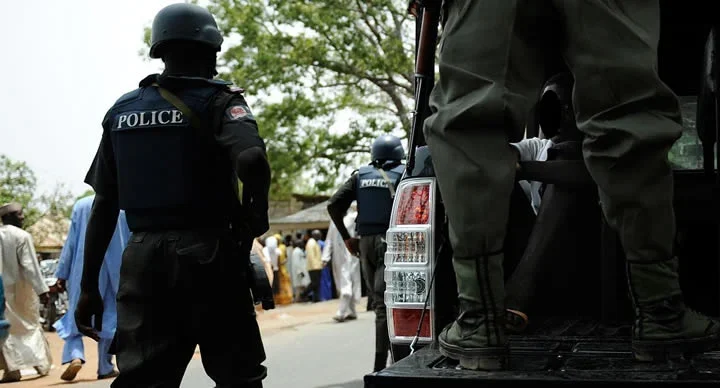
Nigeria’s police and military face profound challenges. Officers are often low-paid, poorly equipped, and insufficiently trained. A UK government assessment notes the country has only about 370,000 police officers for over 220 million citizens. Compounding this, significant numbers are seconded to protect wealthy individuals rather than the general public.
Oluwole Ojewale of the Institute for Security Studies highlights a critical gap: “In remote villages and towns, state security agents are virtually non-existent and surveillance remains very poor.” This absence creates a safe haven for bandits.
Corruption and Slow Response
Corruption and bribery further undermine the security apparatus. These practices erode public trust and hinder effective operations. Moreover, police response to crimes is frequently slow, allowing perpetrators to escape. This inefficient system leaves communities feeling abandoned and forced to negotiate ransoms independently, thereby fueling the criminal economy.
Government Actions and Declared Emergency
Facing public fury, President Tinubu has announced a security emergency. His plan includes a mass recruitment drive for police and military personnel. However, critics argue that simply adding more personnel without comprehensive reform—addressing corruption, equipment shortages, and intelligence capabilities—may yield limited results.
The declaration is a clear acknowledgment of the severe threat. Yet, the resignation of the defense minister at this pivotal moment introduces uncertainty. It now falls on President Tinubu to appoint a successor who can command respect and execute a decisive new strategy.
A Nation at a Crossroads
Ultimately, Nigeria stands at a dangerous crossroads. The defense minister resigns as armed bandits and insurgents exploit systemic vulnerabilities. Communities live in fear, and the social fabric is fraying. Therefore, the government’s next steps are crucial. It must move beyond declarations to implement a coherent, well-resourced, and accountable security strategy. The world is watching to see if Africa’s most populous nation can turn the tide against this devastating violence.