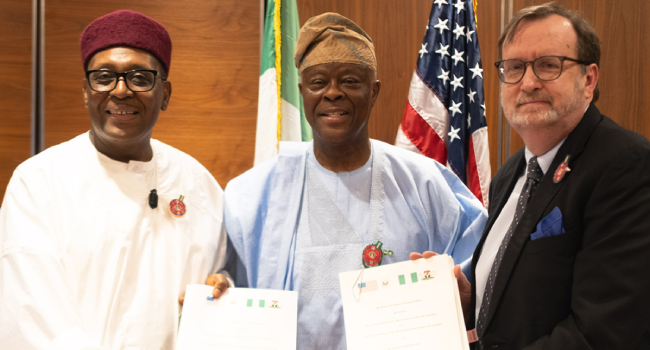
In a groundbreaking partnership, Nigeria and the United States have signed a five-year Memorandum of Understanding (MOU) worth $5.1 billion, aimed at advancing the America First Global Health Strategy and supporting the development of resilient, self-reliant, and durable health systems in Nigeria. The agreement, which was finalized in December 2025, represents the largest co-investment any country has made under the America First Global Health Strategy and underscores both nations’ commitment to improving health outcomes and promoting accountability in the healthcare sector.
The MOU, which is designed to enhance Nigeria’s health infrastructure and expand access to essential healthcare services, is focused on addressing some of the most pressing health challenges facing Nigeria today, including maternal and child mortality, HIV/AIDS, malaria, tuberculosis (TB), and polio. The agreement reflects the U.S.’s commitment to supporting Nigeria’s efforts to strengthen its health systems, increase access to care, and improve public health outcomes for millions of people.
Key Features of the $5.1 Billion Health Cooperation
Under the terms of the MOU, the United States has committed to providing nearly $2.1 billion in health assistance over the next five years. In return, the Nigerian Government will allocate nearly $3 billion in domestic health expenditures, marking a substantial co-investment aimed at strengthening Nigeria’s health systems and making them more self-reliant.
This partnership places a significant emphasis on improving health surveillance systems, addressing outbreak response, and supporting key healthcare components like laboratories, frontline health workers, and health data systems. Through these measures, the U.S. aims to help Nigeria tackle ongoing health challenges, including one of the highest maternal and child mortality rates globally and the fact that Nigeria accounts for approximately 30% of the global malaria burden.
Focus Areas: Expanding Access to Preventive and Curative Services
The collaboration aims to provide more extensive access to preventive and curative healthcare services, with particular focus on HIV/AIDS, tuberculosis (TB), malaria, polio, and maternal and child health. The U.S. will also support efforts to enhance health outcomes across Nigeria, targeting both urban and rural populations that often face barriers to accessing adequate healthcare services.
The MOU also includes a strong emphasis on the role of Christian faith-based healthcare providers, recognizing their indispensable contributions to healthcare delivery, especially in areas where public sector facilities are limited or nonexistent. Nigeria is home to more than 900 faith-based healthcare institutions that serve around 30% of the country’s population. These organizations play a critical role in reaching underserved communities, and this partnership will provide targeted support to strengthen their ability to offer comprehensive services, including HIV, TB, malaria, and maternal and child health care.
Special Support for Faith-Based Healthcare Providers
The agreement allocates approximately $200 million to faith-based healthcare facilities, which will be used to strengthen health workforce capacity and improve access to integrated health services. This investment aims to complement public-sector health facilities and reinforce Nigeria’s overall health infrastructure, ensuring that communities, particularly in remote or underserved regions, have access to high-quality care.
Christian healthcare providers in Nigeria are uniquely positioned to help address the gaps in the healthcare system by providing care in locations where state-run hospitals and clinics are unavailable. The U.S. support aims to empower these providers with the resources and tools they need to continue offering essential health services to those who need them the most.
Promoting Accountability and Religious Freedom
As part of the MOU, the U.S. Government has made it clear that the partnership will include a focus on accountability in the use of funds and in the efforts to address religiously motivated violence. The MOU acknowledges that the safety and protection of Christian populations in Nigeria are of significant importance, especially as the country grapples with extremist violence in some regions. In addition to the health investments, the U.S. expects Nigeria to continue making measurable progress in addressing violence against religious minorities, ensuring that healthcare services are provided without discrimination and in a manner that promotes peace and stability.
Nigeria’s Commitment to National Ownership of Health Systems
The U.S. Mission to Nigeria emphasized that the agreement also underscores Nigeria’s commitment to greater national ownership of its health system. This is seen as a critical step in ensuring that the country is not only able to rely on international aid but can also create and maintain a self-sustaining health system capable of addressing its own needs over the long term.
The $5.1 billion MOU is an example of the co-investment model at work, where both the U.S. and Nigeria commit significant resources to improving public health. Through this collaboration, Nigeria hopes to build a health system that can respond to current needs while preparing for future challenges, such as new disease outbreaks or the evolving needs of a growing population.
Looking Forward: A Long-Term Partnership
The signing of the $5.1 billion MOU marks just the beginning of a long-term commitment between the U.S. and Nigeria to improve the health and well-being of the Nigerian people. The partnership is designed to strengthen healthcare infrastructure, improve disease prevention, and ensure access to care for vulnerable populations across the country.
This agreement also sets a precedent for future health cooperation efforts between the U.S. and other African nations. The success of this partnership could serve as a model for how countries can work together to build resilient health systems, promote accountability, and share responsibility for improving global health outcomes.
The $5.1 billion MOU between Nigeria and the United States represents a major milestone in global health cooperation and marks a significant step in advancing Nigeria’s health agenda. Through this partnership, Nigeria will receive much-needed support to strengthen its healthcare systems, improve access to essential services, and reduce the burden of diseases that have long plagued the country. As the U.S. continues to support Nigeria’s efforts to build a self-reliant and sustainable health system, both nations remain committed to improving health outcomes for Nigerians and promoting shared responsibility in addressing global health challenges.