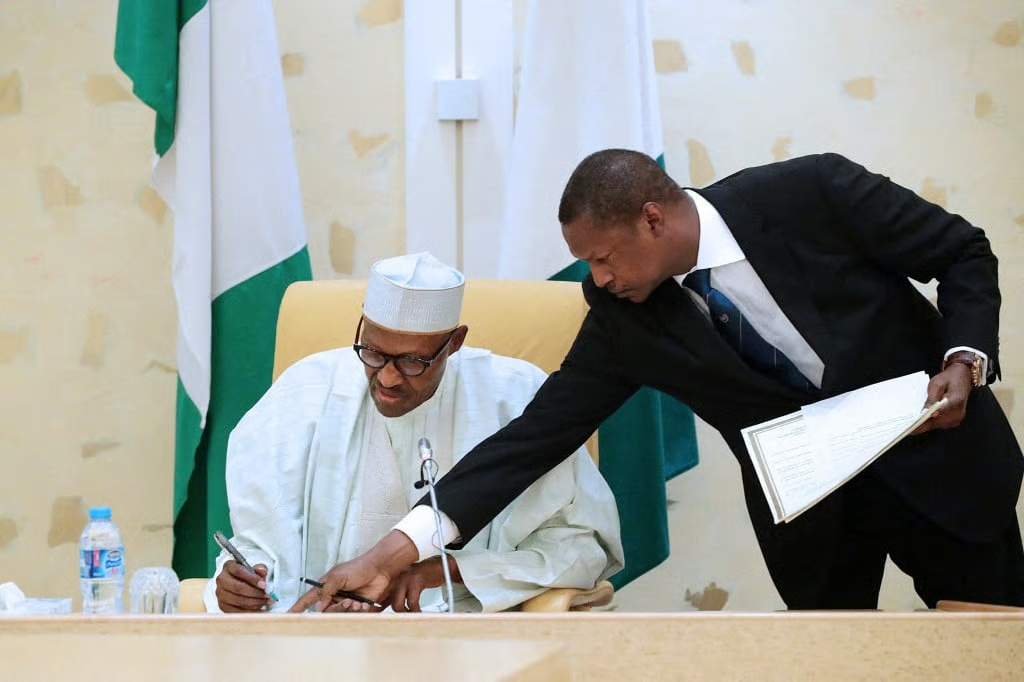
A Nigerian court in Abuja has granted bail to Abubakar Malami, the country’s former attorney general and minister of justice, in a high-profile corruption and money laundering case valued at about $6 million. The ruling comes after weeks of intense public scrutiny and follows his detention since late December.
The decision marks a major development in one of the most closely watched corruption cases involving senior officials from the administration of former president Muhammadu Buhari. Malami served as attorney general between 2015 and 2023 and was widely regarded as one of the most powerful figures in the last government.
Details of the Charges Against Abubakar Malami
Prosecutors charged Malami with 16 counts of money laundering and abuse of office. The alleged offences involve about 8.7 billion naira, equivalent to roughly $6 million. Authorities accuse him of using his position to divert public funds for personal benefit.
Malami has denied all allegations. He pleaded not guilty in court and described his arrest as politically motivated. His legal team maintains that the charges lack merit and insists that the case aims to damage his reputation ahead of future political contests.
Bail Conditions Set by the Court
The court approved bail for Malami, his wife, and his son under strict conditions. Each defendant must post bail of 500 million naira. The court also ordered them to present two guarantors who own property in specific areas of Abuja.
In addition, the court directed the defendants to surrender their international travel documents. These measures aim to ensure their availability for trial and prevent any attempt to leave the country.
Interim Forfeiture of Assets Linked to the Case
Hours before granting bail, the court ordered the interim forfeiture of 57 properties allegedly linked to Malami. The assets, valued at about 213 billion naira, now fall under government custody pending the outcome of the trial.
Investigators say the properties include hotels, residential buildings, factories, schools, undeveloped land, and a printing press. The assets are spread across Abuja, Kebbi State, and Kano State. The sheer scale of the properties triggered widespread debate about the accumulation of wealth by Nigeria’s political elite.
EFCC’s Allegations and Ongoing Investigation
Nigeria’s anti-graft agency, the Economic and Financial Crimes Commission (EFCC), alleges that Malami diverted government funds while in office. According to the commission, the funds financed large-scale property acquisitions across multiple states.
The EFCC recently published a detailed list of assets tied to the former minister. That disclosure intensified public interest in the case and placed renewed focus on accountability for top public officials.
Political Context and Party Defection
Malami’s legal troubles unfold against a shifting political backdrop. He recently left the ruling All Progressives Congress to join the African Democratic Congress. Observers view the ADC as a growing opposition force ahead of the 2027 general elections.
His defection has fueled speculation about political motivations surrounding the case. Supporters argue that his prosecution reflects internal political battles, while critics insist that the charges align with broader anti-corruption efforts.
Public Reaction and Expert Commentary
The case has sparked strong reactions nationwide. Many Nigerians expressed shock at the arrest and detention of a former justice minister once seen as untouchable.
Political analyst Idris Adamu described the moment as surreal. He said seeing Malami escorted to Kuje prison challenged long-held assumptions about power and influence in Nigerian politics. According to Adamu, the prosecution sends a strong signal that even former senior officials can face legal consequences.
What Happens Next in the Trial
The court has adjourned the case until 17 February 2025. During that period, prosecutors will continue presenting evidence, while the defence prepares its response. The outcome could set a significant precedent for future corruption cases involving top government officials.
For now, Malami remains free on bail but under close legal restrictions. The case continues to test Nigeria’s commitment to transparency, accountability, and the rule of law.