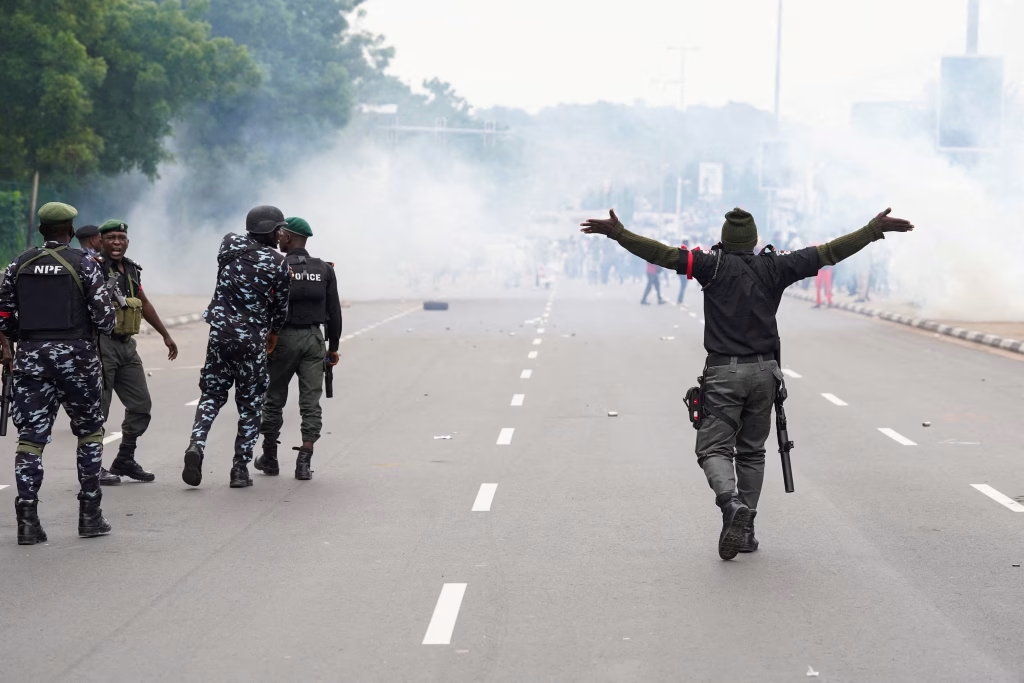
Security breakdowns in northern Nigeria have reached alarming levels in 2025, with armed banditry, insurgency, and widespread displacement devastating large parts of the region. Despite multiple military campaigns and policy interventions, violent groups continue to operate with near-impunity, particularly in the Northwest, Northeast, and Northcentral zones.
Northwest: The Reign of Banditry
States like Zamfara, Kaduna, Katsina, Kebbi, and Sokoto have become epicenters of organized banditry. These groups carry out mass abductions, raid villages, and impose levies on rural populations.
Key developments:
- Over 2,000 people killed in the first five months of 2025 alone
- Schools in rural areas remain closed due to frequent kidnappings of students
- Bandits now demand mobile network shutdowns to evade security surveillance
- Civilians pay ransoms in cash or livestock for kidnapped relatives
Amnesty International and Nigerian NGOs confirm that many victims are children, women, and farmers, with the agricultural economy severely disrupted.
Northeast: Insurgency Remains Resilient
Despite claims of degraded capacity, Boko Haram and its offshoot ISWAP (Islamic State West Africa Province) remain active in Borno, Yobe, and Adamawa.
Recent incidents include:
- A suicide bombing at an IDP camp in Maiduguri, killing 27 civilians
- A military convoy ambushed in Buni Yadi, with 11 soldiers confirmed dead
- Repeated attacks on humanitarian workers and UN aid trucks
Many communities have been cut off from humanitarian aid, while displaced populations continue to swell IDP camps with poor living conditions and minimal services.
Northcentral: Ethno-Religious Violence and Farmer-Herder Conflicts
In states such as Benue, Plateau, and Niger, security breakdowns stem from herder-farmer clashes and community reprisal killings.
Effects on the region:
- Dozens of villages razed in Benue’s Gwer West and Agatu LGAs
- Thousands displaced due to revenge attacks by armed militias
- Local vigilantes fill security gaps, often leading to extrajudicial actions
These conflicts, though framed as ethnic or religious, are often fueled by resource competition, weak governance, and delayed justice.
Government Response: Overwhelmed and Reactive
Despite billions spent on defense and multiple security task forces, the Nigerian government’s approach remains largely reactive.
Notable challenges:
- Delayed deployment of troops to flashpoints
- Corruption in military ranks, including allegations of collaboration with bandits
- Underfunded police units with inadequate equipment and intelligence capacity
- Inconsistent air raids by the Nigerian Air Force with reported civilian casualties
President Bola Tinubu’s administration has launched a Northwest Stabilization Plan, but critics argue it lacks clarity and measurable outcomes.
Impact on Civilians and Economy
The security breakdowns in northern Nigeria have triggered:
- Mass displacement: Over 2.5 million people now internally displaced across the north
- School closures: Education halted for hundreds of thousands of children
- Food insecurity: Disrupted farming cycles and deserted markets
- Investor pullout: Reduced foreign and domestic investment in northern states
Rural dwellers in Katsina and Zamfara now flee at night, seeking safety in urban centers or across borders to Niger and Chad.
Calls for Reform and Collaboration
Security experts and civil society organizations continue to recommend:
- Community-led intelligence networks and trust-building
- Reform of the police structure to give more power to state forces
- Addressing root causes like poverty, land disputes, and youth unemployment
- International partnerships for intelligence, drone surveillance, and logistics
They also urge the government to fully implement the National Security Strategy and revamp peace-building frameworks in the most volatile areas.
The security breakdowns in northern Nigeria reflect systemic weaknesses in governance, accountability, and crisis response. From armed bandits in the northwest to resilient insurgents in the northeast, the region remains caught in cycles of violence that endanger millions.
Addressing this crisis requires more than military action—it demands a comprehensive, community-rooted solution and a long-term investment in stability.
For deeper context, explore our reports on Amnesty International’s brief on Nigeria and Nigeria’s Ministry of Humanitarian Affairs.