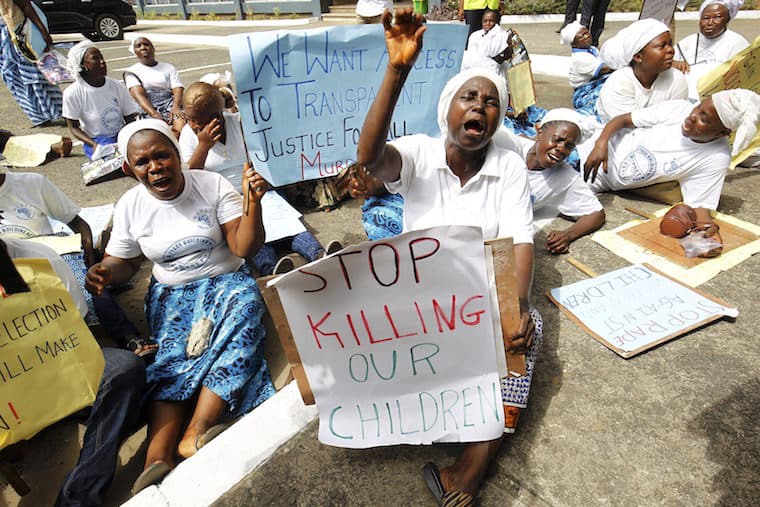
A women’s rights advocate has raised fresh concerns over Nigeria femicide cases, revealing that a woman or girl is killed every 49 hours in the country.
Founder and Executive Director of DOHS Care Foundation, Ololade Ajayi, said data gathered through the organisation’s monitoring system showed a worrying increase in gender-related killings.
According to her, the organisation uses a Femicide Observatory that tracks killings of women and girls through internet reports, social media updates, mainstream media reports and alerts from local communities.
She disclosed that the organisation recorded more than 42 cases between January and April this year. Another 12 cases were documented in May, bringing the total number of cases recorded in 2026 to 54.
Ajayi explained that Nigeria femicide remains largely underreported, especially in rural communities where access to information and justice is limited.
Nigeria femicide cases continue to rise
The activist said the organisation tracked 197 gender-related killings in 2023. In 2024, it documented about 133 cases involving the deaths of 150 women and girls.
According to her, the increasing figures demonstrate that Nigeria femicide has become a major social challenge requiring urgent government intervention.
She noted that many of the victims were killed because of their gender or because they rejected advances from men.
Ajayi also said several incidents occur within homes, making domestic spaces dangerous for many women.
The rights advocate added that data from the observatory indicated that intimate partners, husbands and boyfriends were responsible for many of the cases.
She warned that unless authorities address the root causes of Nigeria femicide, the number of victims may continue to increase.
Justice remains slow in Nigeria femicide cases
Ajayi said only a few cases have received swift justice despite growing public concern over the killings.
She cited the cases of Hauwa Alli and Salome Adaidu as examples where convictions were secured.
According to her, Alli was killed by a serving soldier who was later sentenced to death through a court-martial process.
Similarly, Salome Adaidu’s killer was convicted and sentenced to death under the Penal Code in Nasarawa State.
However, she said most Nigeria femicide cases remain unresolved years after the crimes occurred.
The activist explained that victims’ families often face lengthy legal battles, repeated court appearances and emotional trauma while seeking justice.
She urged authorities to accelerate investigations and prosecutions involving gender-related killings.
Homes remain dangerous for women
Ajayi said the home remains the most dangerous place for many Nigerian women.
Data from the observatory showed that many Nigeria femicide incidents occurred inside homes and involved people known to the victims.
She explained that husbands, boyfriends, former partners and relatives frequently appear as suspects in reported cases.
The activist also identified rejection of sexual advances as a common trigger.
She referred to incidents involving women who were attacked after refusing relationships or ending previous relationships.
According to her, women and girls should feel protected in their homes, but many instead face violence from those closest to them.
She described this trend as deeply troubling and called for stronger preventive measures.
Substance abuse linked to Nigeria femicide
Ajayi identified substance abuse as another factor contributing to violence against women.
She said drug addiction has affected not only users but also female relatives, spouses and acquaintances.
Several cases documented by the observatory involved women who were allegedly killed by sons or relatives struggling with substance abuse.
The activist noted that many incidents involve repeated violence before the eventual killing.
She explained that warning signs often exist before the final act.
According to her, incidents involving strangulation, use of weapons, physical assault and threats should receive immediate attention.
She said these risk factors can help authorities identify women who may be vulnerable to Nigeria femicide.
Calls for special laws and response units
Ajayi called for legislation specifically targeting femicide in Nigeria.
She argued that existing homicide laws fail to distinguish gender-related killings from other forms of murder.
According to her, recognising Nigeria femicide as a separate crime would help authorities understand motives and identify risk factors.
She also advocated for dedicated police response units trained to handle cases involving domestic violence and threats against women.
Such officers, she said, would recognise danger signs and intervene before violence escalates.
Ajayi maintained that misogyny remains one of the underlying causes of many killings.
She argued that some perpetrators view women as inferior and act with a sense of entitlement and impunity.
The activist warned that without stronger laws, specialised response units and improved public awareness, Nigeria femicide cases may continue to rise.
She added that the loss of women in their productive years also affects economic growth because many victims are professionals, entrepreneurs and skilled workers who contribute to national development.