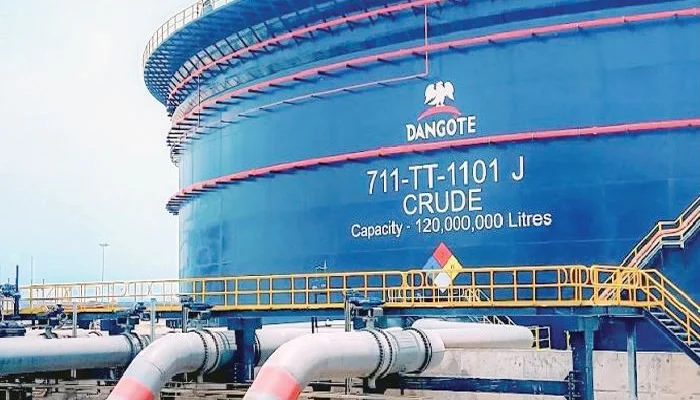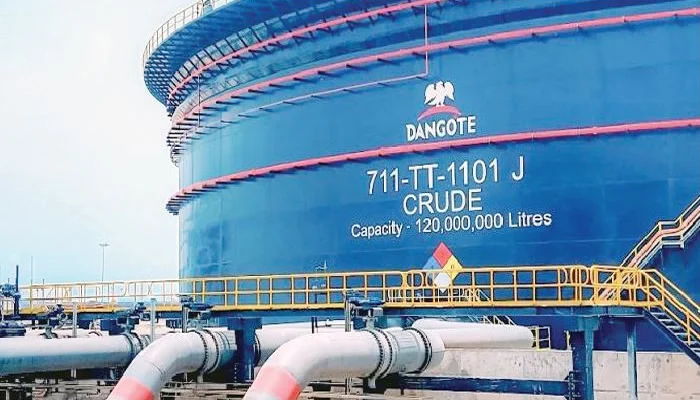
Dangote Fuel Pricing has sparked fresh controversy in Nigeria’s petroleum industry after the Dangote Petroleum Refinery adopted United States dollar-denominated pricing for selected petroleum products. Independent marketers and industry experts say the move could increase foreign exchange demand, raise fuel prices, and complicate operations in the country’s deregulated downstream sector.
The refinery recently notified marketers that payments for Premium Motor Spirit (PMS), Automotive Gas Oil (diesel), and aviation fuel supplied through its gantry and coastal facilities would now be made in US dollars. The decision has reignited debate over the future of Nigeria’s petroleum market and the balance between commercial freedom and economic stability.
Dangote Fuel Pricing Sparks Industry Opposition
Industry stakeholders have questioned the wisdom of introducing dollar-based transactions for petroleum products sold within Nigeria.
The Petroleum Products Retail Outlets Owners Association of Nigeria (PETROAN) warned that the policy could gradually encourage the dollarisation of the economy if left unchecked. The association acknowledged Dangote Refinery’s significant contribution to domestic fuel production but insisted that pricing decisions should also reflect Nigeria’s economic realities.
PETROAN President Billy Gillis-Harry argued that marketers would struggle to obtain foreign currency from commercial banks, especially during periods of exchange rate volatility. He warned that additional forex demand could raise business costs and eventually translate into higher pump prices nationwide.
The association also stressed the need for stronger competition in the downstream sector by reviving government-owned refineries to reduce dependence on a single major supplier.
Dangote Fuel Pricing Raises Fresh Forex Concerns
The Independent Petroleum Marketers Association of Nigeria (IPMAN) has called on President Bola Tinubu to intervene before the policy creates wider economic challenges.
According to the association, exchange rates already play a major role in determining fuel prices because crude oil trades in dollars. Adding domestic fuel purchases to the list of dollar-denominated transactions could further increase demand for foreign exchange and intensify pressure on the naira.
IPMAN urged the Federal Government to preserve the crude-for-naira arrangement introduced to support domestic refining. The marketers believe the policy remains one of the most effective tools for reducing foreign exchange exposure and maintaining stable fuel prices.
They also warned that increased dollar demand could affect transportation costs and push inflation higher across several sectors of the economy.
Dangote Fuel Pricing Influences Depot Prices
The refinery’s announcement quickly affected petroleum depots across the country.
Market data showed that several depots in Lagos, Port Harcourt, and Warri reviewed their loading prices shortly after the refinery introduced the new payment structure. Petrol prices increased significantly at some facilities, while diesel prices also recorded noticeable adjustments.
Industry operators explained that depot owners had begun recalculating replacement costs based on anticipated dollar-denominated purchases. Although Dangote Refinery has not released revised ex-depot petrol prices, marketers have already adjusted their pricing expectations.
The situation has revived discussions about how deregulation should operate when one producer commands a substantial share of domestic fuel supply.
Experts Offer Different Views on Dangote Fuel Pricing
Energy experts remain divided over the refinery’s latest policy.
Petroleum economist Prof. Wumi Iledare described the decision as a normal commercial response to foreign exchange risks. He explained that companies purchasing crude oil and production inputs in dollars often seek to align their revenues with their operational costs.
According to him, publishing a selling price does not amount to price fixing because competition ultimately determines market prices in a deregulated environment. He added that domestic refining strengthens energy security but does not eliminate exposure to global oil markets or exchange rate fluctuations.
However, University of Lagos energy scholar Prof. Dayo Ayoade expressed reservations about the policy.
He argued that petroleum products sold within Nigeria should ordinarily be priced in naira since it remains the country’s legal tender. While acknowledging the refinery’s concern about currency risks, he questioned whether the decision serves Nigeria’s broader economic interests.
Ayoade called on the Nigerian Midstream and Downstream Petroleum Regulatory Authority, the Federal Competition and Consumer Protection Commission, and the Central Bank of Nigeria to review the policy and determine whether regulatory action is necessary.
He maintained that regulators should protect competition without discouraging private investment in the energy sector.
Dangote Fuel Pricing Keeps Debate Over Deregulation Alive
The controversy surrounding Dangote Fuel Pricing highlights the challenges facing Nigeria’s deregulated petroleum market.
Dangote Refinery has transformed domestic fuel supply by reducing reliance on imported petroleum products and strengthening local refining capacity. However, the decision to adopt dollar-based pricing has reopened discussions about market regulation, foreign exchange management, competition, and consumer protection.
Industry participants believe continued dialogue between the Federal Government, regulators, marketers, and the refinery will be necessary to prevent market instability while sustaining investor confidence.
As consultations continue, the outcome could influence future pricing policies and shape the next phase of Nigeria’s downstream petroleum reforms.