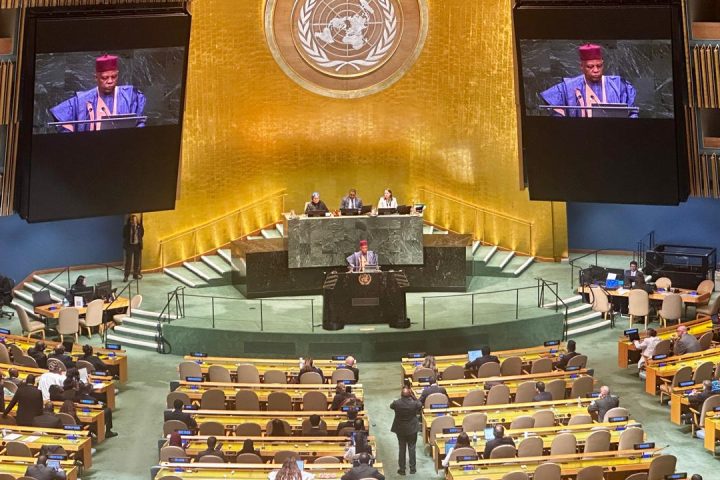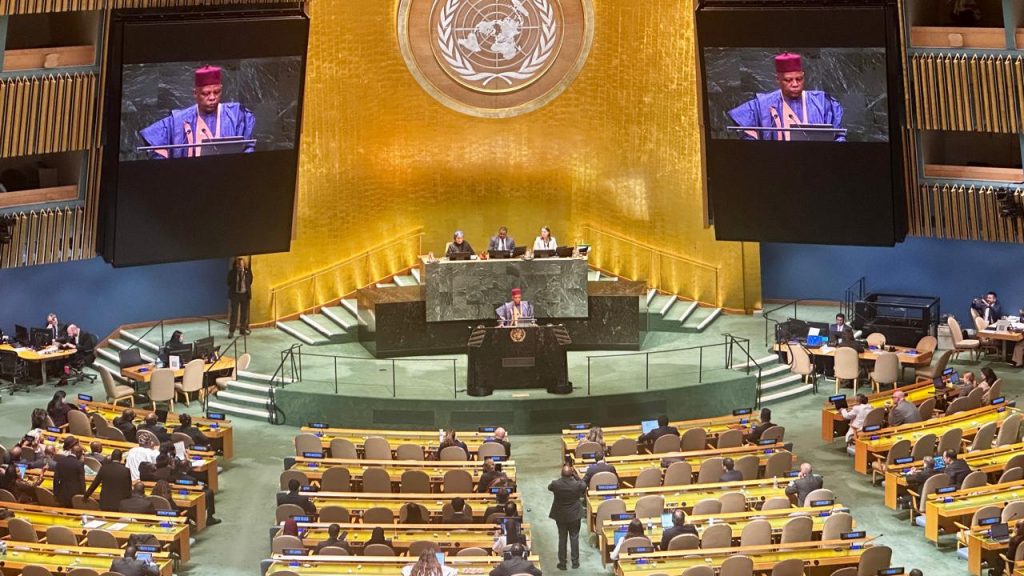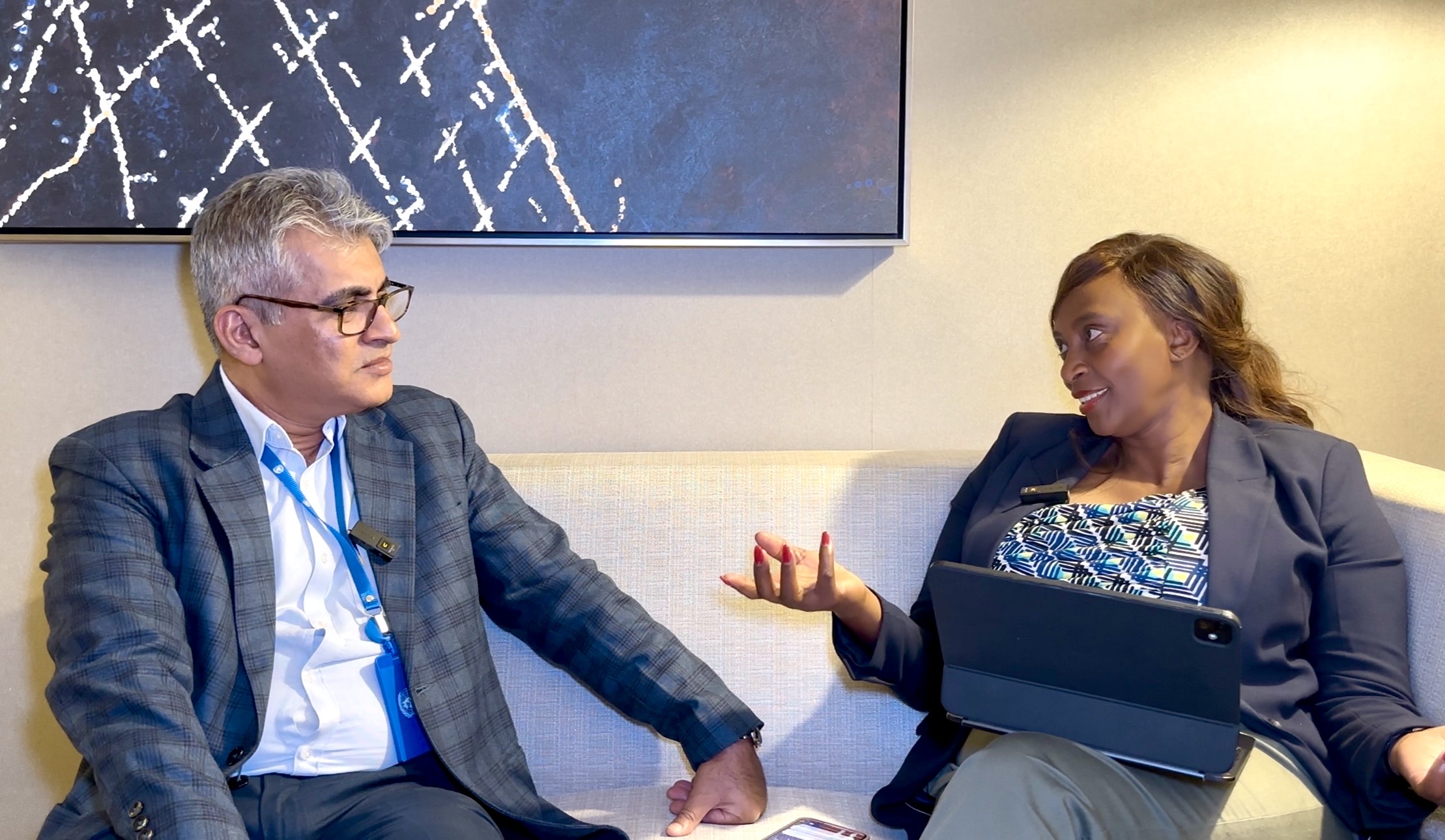

NEW YORK, USA: At the 81st United Nations General Assembly, where the dominant conversations have centred on war, geopolitical rivalry, economic fragmentation and the restructuring of global power, Kenya has brought another dimension of security into sharp focus: the security of human life. Through its health-security agenda, Nairobi is making a broader argument for Africa that preparedness, medical manufacturing, disease surveillance, climate resilience and regional cooperation are no longer technical public-health concerns but essential components of national sovereignty, economic resilience and continental security.
That argument emerged with unusual clarity in an exclusive WorldAffairs conversation between Dr. M. Shahid Siddiqui, Editor-in-Chief of WorldAffairs and WNN, and Hon. Mary Muthoni Muriuki, Principal Secretary for Public Health, Government of Kenya, on the sidelines of UNGA 81 in New York. The conversation, conducted exclusively for WorldAffairs, revealed how Kenya is attempting to translate the lessons of COVID-19 into a longer-term African model of preparedness, one that seeks to detect threats earlier, strengthen national systems, reduce dependence on external medical supply chains and build a regional architecture capable of responding to health emergencies before they become continental crises.

The significance of Kenya’s position is that it goes beyond the conventional language of pandemic response. For much of the developing world, and particularly Africa, major health emergencies have historically exposed structural weaknesses only after a crisis has already begun. The question has too often been how quickly governments can react once hospitals are overwhelmed, supply chains disrupted and infections spreading across borders. Kenya is attempting to change that sequence. Its argument is that the real measure of health security is not the sophistication of the emergency response after a crisis begins, but the strength of the systems that exist before it.
“The most important change is moving from a reactive approach to a more proactive preparedness model,” Muriuki told WorldAffairs.
That statement captures the central philosophy behind Kenya’s second-generation National Action Plan for Health Security 2026–2030, which has been developed to strengthen the country’s capacity to prevent, detect and respond to public-health threats. WHO has described the plan as a framework covering areas including surveillance, antimicrobial resistance, emergency management and risk communication, while also strengthening coordination across human, animal and environmental health. The importance of the framework is therefore not simply administrative. It reflects an attempt to institutionalise preparedness rather than treat it as a temporary response to an exceptional event.
“Health security cannot be treated only as an emergency response issue,” Muriuki said.
That is an important distinction for Africa. A pandemic does not begin when governments declare an emergency. It begins much earlier in surveillance data, unexplained clusters, ecological changes, animal-to-human transmission, laboratory signals and community-level health patterns. The countries that identify those signals early have more options. Those that discover them late often have fewer.
Kenya’s approach is consequently built around the idea that early warning must become a permanent function of the state. That requires laboratories, trained personnel, digital surveillance, emergency operations, community health systems and the institutional capacity to turn information into action. It also requires something that is often more difficult than building infrastructure: coordination.
“A disease outbreak does not recognise political boundaries,” Muriuki told WorldAffairs.
For East Africa, that reality is particularly consequential. The movement of people and goods across national borders is central to regional economic integration, but the same connectivity can accelerate the spread of infectious diseases. Kenya therefore sees regional health cooperation not as an optional diplomatic exercise but as part of the continent’s security architecture. Its role in hosting the Africa CDC Eastern Africa Regional Coordinating Centre gives Nairobi an important institutional platform for advancing that cooperation.
But the more significant proposition is that regional coordination must exist before the crisis.
“The goal should be to make regional coordination routine rather than something we establish only after an outbreak has already crossed a border.”
That is a lesson extending well beyond public health. Africa has invested heavily in regional economic communities, transport corridors and cross-border trade. The next phase of integration must also consider whether the continent possesses the shared surveillance, information and emergency mechanisms required to make that connectivity resilient. A regional market without regional health-security capacity remains vulnerable to disruption.
The same logic applies to medical manufacturing. COVID-19 exposed one of the most persistent structural weaknesses in Africa’s relationship with the global economy: the continent represents a large share of global health needs but remains heavily dependent on external production for many essential medical products. When global demand surged, access to vaccines, diagnostics, medicines and equipment became a question not only of public health but of geopolitical and economic power.
Kenya is attempting to turn that vulnerability into an opportunity.
Its Health Products and Technologies Local Manufacturing Strategy 2026–2030 seeks to expand domestic production and strengthen the regulatory environment. WHO has reported that Kenya continues to import a substantial share of the pharmaceuticals it consumes, illustrating both the scale of the dependency and the potential size of the domestic and regional opportunity.
Muriuki framed the issue in terms of sovereignty, but carefully avoided presenting sovereignty as isolation.
“Health security requires a degree of health sovereignty, and local and regional manufacturing is an important part of that.”
She immediately added an important qualification:
“But self-reliance does not mean that every African country must manufacture every product.”
That distinction could become central to Africa’s industrial future. The continent does not necessarily need dozens of parallel industries manufacturing identical products at inefficient scales. What it needs is a connected production ecosystem in which different countries develop complementary capabilities, regional markets create demand, procurement becomes more predictable and regulatory systems allow products to move efficiently across borders.
The real challenge is therefore not simply whether Africa can build factories. It is whether those factories can survive commercially.
“A factory needs a market,” Muriuki said.
The simplicity of that statement conceals a major economic challenge. Manufacturing requires capital, technology, skilled workers, infrastructure, procurement certainty and market access. A factory producing medicines cannot remain viable if government procurement is unpredictable or if regulatory barriers make it difficult to sell into neighbouring markets. African health manufacturing therefore cannot be separated from the African Continental Free Trade Area, regional economic communities and efforts to harmonise regulatory systems.
The ambition must also extend beyond basic production. Africa’s long-term health security cannot depend only on importing sophisticated technology while locally producing lower-value products. Diagnostics, vaccines, medical devices, research capabilities and advanced health technologies will increasingly determine whether the continent can compete in the global health economy.
“That is where health security and economic development come together,” Muriuki said.
That sentence may ultimately prove to be one of the most important messages of Kenya’s UNGA 81 engagement. Health security is increasingly becoming industrial policy. A vaccine factory is not simply a public-health investment. It is manufacturing capacity, technology transfer, skilled employment, supply-chain resilience and strategic autonomy. A diagnostic laboratory is not simply a medical facility. It is part of national intelligence about biological threats.
This is also why Kenya is connecting health with diplomacy.
“Health diplomacy has become increasingly important,” Muriuki said.
Her broader point was even more explicit: “Health is not separate from foreign policy, trade or national security.”
The COVID-19 experience demonstrated why. Access to vaccines and technology was influenced by international supply chains, financing, research partnerships and geopolitical relationships. For Africa, health diplomacy is therefore becoming part of the wider struggle to shape the terms on which the continent participates in the global economy.
Kenya’s preferred approach is partnership, but partnership with a strategic objective.
“The objective should be partnerships that strengthen African capacity rather than creating permanent dependence.”
That formulation reflects a broader transformation in African diplomacy. The continent increasingly wants investment that creates productive capacity, technology partnerships that generate local expertise and financing that strengthens national systems rather than simply sustaining short-term programmes.
The financing question is particularly important as international development assistance faces growing pressure and health programmes move toward greater domestic sustainability. Kenya’s engagement with the Global Fund, particularly around Grant Cycle 8, illustrates the transition. External financing remains critical to programmes addressing HIV, tuberculosis and malaria, but the strategic question is how international support can strengthen systems that ultimately become more sustainable.
“For Kenya, the important principle is that external financing should help strengthen sustainable national systems.”
The point is not that Africa can immediately replace international financing. It cannot. The point is that external financing must increasingly leave behind stronger institutions, supply chains, community systems and domestic financing mechanisms.
Climate change adds another layer to the health-security equation. Kenya has increasingly recognised that health preparedness cannot be separated from environmental and climate risks. Flooding can destroy health facilities and contaminate water. Heat can increase pressure on already stretched health systems. Changes in ecological conditions can alter disease patterns and vector behaviour. Climate shocks can therefore become health emergencies with extraordinary speed.
“Climate and health can no longer be considered separate issues,” Muriuki said.
That is no longer simply an environmental proposition. It is a security proposition. A resilient health system requires resilient infrastructure, reliable water and energy, climate-informed surveillance and the ability to anticipate rather than merely respond to climate-linked health risks.
For Kenya, the investment implications are equally significant. Pharmaceutical manufacturing, diagnostics, medical technologies, health infrastructure and public-private partnerships are increasingly being positioned as areas where private capital can contribute to both economic development and health resilience. But investors require more than opportunity. They require regulatory predictability, infrastructure, skills, financing, market access and long-term demand.
Muriuki therefore sees the health sector as part of a wider economic architecture.
“The opportunity is to connect health policy with industrial policy and trade policy.”
That proposition elevates the discussion beyond hospitals and medicines. It suggests that Africa’s health-security strategy can become part of its industrialisation strategy, just as digital infrastructure, energy security and transport corridors have become components of economic sovereignty.
This is where Kenya’s role at UNGA 81 becomes particularly significant.
Kenya is not arguing that it has solved Africa’s health-security challenges. It has not. Nor can one national strategy eliminate the structural vulnerabilities that remain across the continent. But Nairobi is increasingly positioning itself at the intersection of several African priorities: public-health preparedness, regional integration, pharmaceutical manufacturing, climate resilience, economic diplomacy and strategic autonomy.That combination gives Kenya a distinctive continental voice.
At UNGA 81, Kenya’s message therefore reaches beyond pandemic preparedness. It is a statement about what African sovereignty should mean in an interconnected world. Sovereignty does not necessarily mean producing everything domestically or withdrawing from international systems. It means possessing enough institutional, technological and productive capacity to make strategic choices when global systems come under stress.
The WorldAffairs Exclusive conversation with Mary Muthoni Muriuki made that philosophy visible. Kenya’s emerging model links surveillance with sovereignty, manufacturing with security, trade with health, climate resilience with preparedness and diplomacy with capacity-building.
The larger African question is now whether this approach can move from strategy to scale.
Can national preparedness plans become functioning systems at county and community level? Can African manufacturers secure predictable regional demand? Can regulatory harmonisation turn fragmented markets into a genuine continental health market? Can international partnerships deliver technology transfer rather than permanent dependence? Can climate financing reach health systems before disasters overwhelm them?
Those questions will determine whether Africa’s post-COVID health-security moment becomes another collection of commitments or the beginning of a structural transformation.
Kenya’s intervention at UNGA 81 suggests that Nairobi understands the stakes. The next pandemic, epidemic or climate-linked health emergency will not wait for diplomatic calendars. It will move according to biology, geography and human mobility.
Africa therefore has a choice: remain primarily a responder to crises created by external shocks, or build the capacity to anticipate, absorb and manage them on its own terms.
Kenya’s emerging health-security strategy is an attempt to make the second option possible.
And that is why the WorldAffairs Exclusive conversation from UNGA 81 matters beyond Kenya. It captures a country seeking to turn the lessons of a global pandemic into a continental proposition: preparedness before crisis, capacity before dependency, regional cooperation before fragmentation, and health security as a foundation of Africa’s wider economic and strategic sovereignty.
As Muriuki put it, the objective is “to build partnerships that create value for investors while also strengthening Kenya’s health system and contributing to Africa’s broader health-security agenda.”
The real test will now be whether Africa can build that agenda before the next emergency arrives.
-Ed Osmond