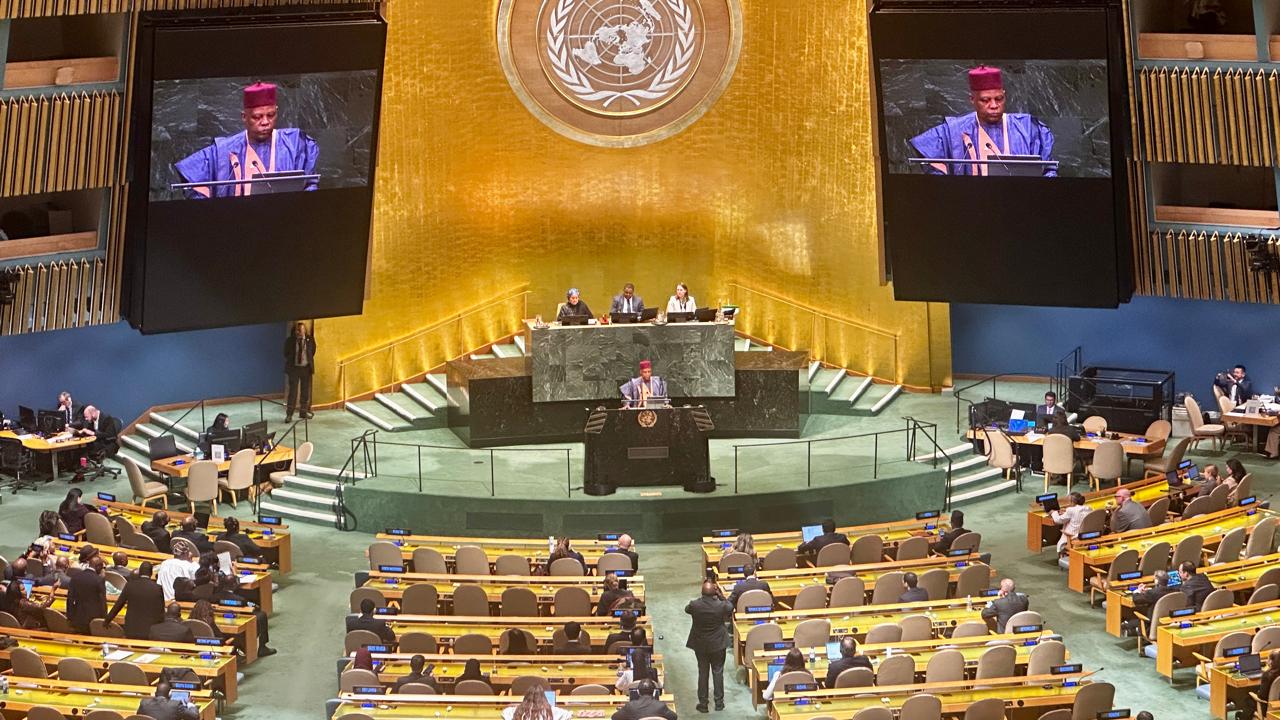
NEW YORK- The most important story of the 81st United Nations General Assembly was not only the confrontation between great powers. It was Africa’s emergence as a remarkably coordinated diplomatic voice demanding justice, institutional equality, and a fundamental restructuring of global governance. Yet within that historic moment, the continent’s largest nation “Nigeria” struggled to shape the agenda it has long claimed to lead. This conclusion is the editorial assessment of WorldAffairs, grounded in the official UN proceedings and reporting by the United Nations, Reuters, Associated Press, the African Union, UNDP Africa, and other international media.
The official theme of UNGA 81, “Restoring Trust, Managing Transformation: A United Nations That Delivers for All,” became the defining framework of the week. But beneath the diplomatic language lay a more uncomfortable reality: trust in international institutions has become increasingly fragile. From wars in Gaza and Ukraine to debt crises, climate vulnerability, artificial intelligence and Security Council reform, leaders repeatedly questioned whether a world governed by institutions created in 1945 can adequately respond to the geopolitical realities of 2026. The United Nations itself acknowledged that the international system is entering a period where legitimacy depends upon representation as much as power.
No region articulated that argument more coherently than Africa. Across speeches and high-level engagements, Kenya, Ghana, South Africa, Namibia, Sierra Leone and Egypt presented complementary rather than competing visions of reform. According to UNDP Africa’s analysis of UNGA 81, the continent entered New York not as a recipient of solutions but as a contributor to the next generation of global governance, placing financing, technology, demographic transformation and institutional reform at the centre of international debate.
Kenya emerged as one of the intellectual leaders of that African agenda. President William Ruto argued that today’s interconnected crises cannot be solved by institutions designed for another century, insisting that multilateralism must evolve to reflect contemporary political, economic and demographic realities. His diplomacy extended beyond the General Assembly podium through bilateral meetings with Ghana and other African partners, where Nairobi pushed for a unified continental position on Security Council reform, regional security and greater African influence in global decision-making. The African Union similarly highlighted Kenya’s leadership in advancing Africa’s common position during UNGA 81.
Namibia reinforced that institutional critique through a legal and moral argument. President Netumbo Nandi-Ndaitwah warned against the selective application of international law, maintaining that sovereign equality loses legitimacy when legal principles are applied differently according to geopolitical influence. Her intervention resonated strongly during a General Assembly dominated by disputes over Gaza, Ukraine and territorial sovereignty, where accusations of double standards repeatedly surfaced in diplomatic exchanges.
South Africa broadened Africa’s narrative beyond institutional reform by redefining security itself. Pretoria argued that armed conflict cannot be separated from economic inequality, sovereign debt, climate disruption, migration and unequal access to global finance. Rather than treating peace as merely the absence of war, South Africa presented justice and inclusive development as essential conditions for durable international stability, a position widely reflected in Reuters’ coverage of its UNGA engagement and broader Global South diplomacy.
Egypt adopted a distinctly regional diplomatic posture. Positioned between Africa and the Middle East, Cairo emphasized humanitarian access in Gaza, preventing wider regional escalation and preserving a rules-based security architecture. International reporting consistently portrayed Egypt as one of the principal diplomatic actors seeking to balance security imperatives with humanitarian responsibility, reinforcing its longstanding role as a stabilizing regional power during one of the most volatile periods in Middle Eastern politics.
Ghana supplied perhaps the Assembly’s most compelling moral argument. President John Dramani Mahama urged member states to recognize the transatlantic slave trade as “the gravest crime against humanity,” arguing that genuine reconciliation requires confronting historical injustice alongside contemporary conflict. Reuters and Ghana’s Presidency both reported that Mahama coupled this reparative justice agenda with a broader diplomatic campaign focused on economic recovery, technology partnerships and strengthening Africa’s collective voice through the Accra Reset initiative. His meetings with President Ruto and UN Secretary-General António Guterres reinforced the growing alignment between historical justice and Africa’s future development agenda.
These African interventions converged around a single institutional demand: reform of the United Nations Security Council. Sierra Leone renewed the continent’s call for permanent African representation, while the African Union reiterated the Ezulwini Consensus, arguing that Africa’s exclusion from permanent membership remains a historic injustice. Secretary-General António Guterres echoed that position in what is widely regarded as his final General Assembly address after a decade in office, warning that humanity faces a defining choice between fragmentation and interdependence and describing Africa’s continued exclusion from permanent representation as increasingly indefensible if the United Nations is to retain global legitimacy.
It was precisely within this unusually unified African moment that Nigeria’s diplomatic performance became the subject of growing international observation.
Nigeria entered UNGA 81 with extraordinary advantages. It remains Africa’s largest population, one of its biggest economies, a cultural superpower and historically one of the continent’s most influential diplomatic actors. Its leadership in ECOWAS, extensive peacekeeping record and decades of regional mediation have earned Abuja substantial international credibility. Few African countries possess comparable geopolitical weight or diplomatic experience.
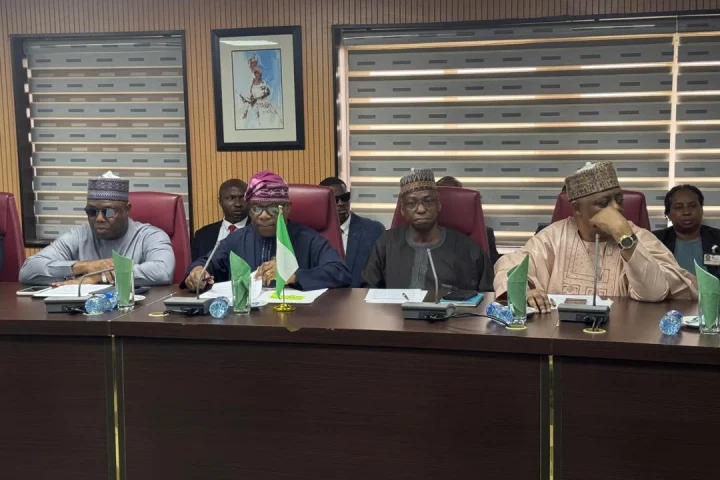
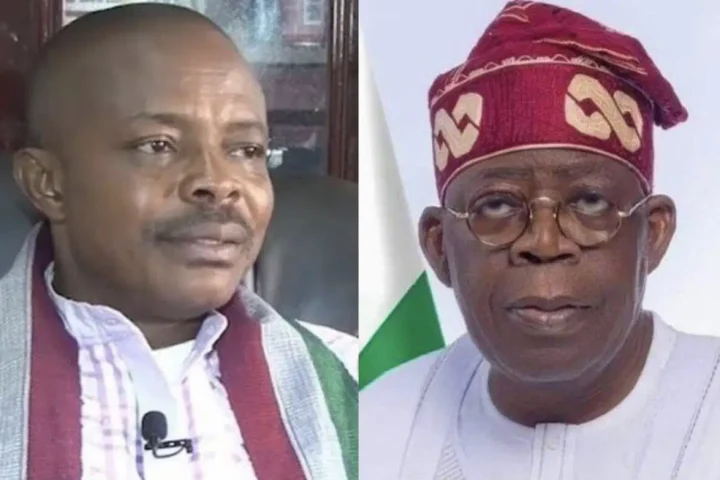
Yet several international observers noted the contrast between Nigeria’s stature and its visibility during the Assembly. BusinessFront reported that President Bola Tinubu’s decision to remain in France and once again delegate Nigeria’s representation to Vice President Kashim Shettima sparked domestic criticism over whether Africa’s largest nation had weakened its presence during one of the year’s most important diplomatic gatherings. The publication argued that while Kenya pursued investment, Ghana championed reparations and South Africa projected strategic autonomy, Nigeria continued lobbying for Security Council reform without generating a similarly defining international narrative.
That distinction is important. Vice President Shettima represented Nigeria with dignity and reaffirmed Abuja’s commitment to multilateral cooperation, but diplomacy in the twenty-first century is increasingly measured not by attendance alone, but by agenda-setting influence. During UNGA 81, Kenya framed institutional reform, Ghana reshaped the conversation on historical justice, South Africa connected peace with economic equity, Egypt projected regional stabilization, and India transformed counterterrorism into a doctrine of international accountability. Nigeria participated in the conversation, but it did not lead it.
This is not an indictment of Nigerian diplomacy; it is a reflection on unrealized leadership. Modern international influence is built through ideas that travel beyond national delegations, intellectual coalitions that shape negotiations, and strategic clarity that persuades other states to adopt common positions. Demography creates relevance, but diplomatic authority is earned through consistent agenda-setting.
UNGA 81 ultimately revealed two parallel stories. One was the fragmentation of the global order, visible in conflicts stretching from Gaza to the Indo-Pacific. The other was Africa’s growing confidence in demanding a more representative international system. Kenya spoke for institutional reform, Ghana for historical justice, South Africa for equitable peace, Egypt for regional stability, Namibia for sovereign equality, and Sierra Leone for democratic legitimacy within the United Nations.
For WorldAffairs, the enduring lesson is unmistakable: Africa found its collective voice. Nigeria, despite possessing every credential to become that voice’s natural leader, allowed a defining diplomatic moment to pass without leaving the international imprint its stature deserves.
-Morris Caven