ABUJA: Nigeria is entering a potentially decisive phase in the restructuring of its petroleum industry as Nigerian National Petroleum Company Limited (NNPC Ltd.) pursues the sale of interests in selected oil and gas assets while working to mobilise approximately $2 billion in financing for the rehabilitation and upgrading of critical pipeline infrastructure. The initiatives are unfolding against a difficult backdrop of volatile crude production, years of underinvestment, oil theft, pipeline vandalism, ageing infrastructure and financing constraints, but they also coincide with renewed investor interest in Nigerian upstream acreage. For Africa’s largest oil producer, the issue is no longer simply how much petroleum remains beneath its soil and waters, but whether Nigeria can create the infrastructure, security environment, financing mechanisms and regulatory certainty required to convert those resources into sustained production, exports, government revenue and broader economic growth. Nigeria retains one of the world’s significant hydrocarbon resource bases, with more than 37 billion barrels of proven crude-oil reserves and roughly 200 trillion cubic feet of proven natural-gas reserves, yet its actual oil production has remained significantly below the levels achieved during its strongest production years. The current NNPC strategy therefore represents an attempt to address both the financial structure of the industry and one of its most persistent physical bottlenecks: the ability to safely move crude and gas from producing fields to markets.
NNPC’s proposed asset divestments are particularly significant because they could alter the ownership structure of strategically important petroleum projects and provide the national oil company with additional liquidity for investment and financial obligations. The company has invited prospective investors to participate in transactions involving selected oil and gas interests through a process involving registration, technical and financial prequalification, access to a secure virtual data room for qualified bidders, evaluation of documentation, negotiations and the completion of applicable regulatory approvals. The process reflects the broader transformation of Nigeria’s petroleum industry since the enactment of the Petroleum Industry Act in 2021, which sought to establish a more commercially oriented framework for the sector while clarifying the roles of government institutions and improving conditions for investment. However, the proposed reduction of government interests in some assets has generated opposition from organised labour. The Petroleum and Natural Gas Senior Staff Association of Nigeria (PENGASSAN) and the Nigeria Union of Petroleum and Natural Gas Workers (NUPENG) have criticised reports of possible reductions in government participation in certain joint-venture assets, with reported proposals involving reductions of approximately 30–35% in some cases. The unions have argued that substantial reductions in state participation could affect public revenues, strategic control over petroleum resources and employment interests. Their position highlights the difficult balance facing Abuja: Nigeria needs private capital, technology and operational expertise, but the state must also ensure that any asset divestment represents fair value and protects the country’s long-term economic interests rather than simply generating short-term liquidity.
The pipeline question is central to that calculation. Nigeria operates a petroleum pipeline network extending for more than 5,000 kilometres, connecting producing fields with processing facilities, export terminals, refineries and gas infrastructure. Much of the network has been exposed over the years to corrosion, vandalism, illegal connections, crude theft and inadequate maintenance, while security challenges in the Niger Delta have periodically disrupted production and evacuation. NNPC’s reported discussions with Nexus Alliance over approximately $2 billion in financing for pipeline rehabilitation and upgrading therefore have significance well beyond an infrastructure-maintenance programme. The objective is to restore damaged sections, improve the reliability of crude evacuation, reduce losses and strengthen the ability of producers to move hydrocarbons from fields to export and processing facilities. The national economic implications are substantial because an oil field that cannot evacuate its production cannot operate at its full commercial potential. If a producer loses the ability to transport crude because of a damaged or vandalised pipeline, production may have to be reduced or temporarily shut in. At a purely illustrative price of $70 per barrel, an additional 100,000 barrels per day sustained for a full year would represent approximately $2.56 billion in gross annual sales value, before production costs, royalties, taxes and other deductions. Conversely, the loss of 200,000 barrels per day over an entire year would correspond to approximately 73 million barrels, with a gross market value of about $5.1 billion at $70 per barrel. These calculations help explain why pipeline reliability has become inseparable from Nigeria’s ambition to raise crude production and restore petroleum revenues.
The proposed financing also comes as NNPC continues to explore other financing and refinancing options, including discussions with lenders based in Saudi Arabia, as the national oil company seeks to strengthen its financial position and finance strategic projects. Nigeria’s petroleum industry requires large and sustained capital expenditure, particularly as producers seek to maintain mature fields while developing new discoveries and frontier acreage. International oil companies have also been restructuring their Nigerian portfolios, with divestments and asset transfers creating opportunities for indigenous producers and other investors to acquire producing or development-stage assets. The resulting transformation has the potential to increase the role of Nigerian companies in upstream operations, but it also creates a financing challenge because acquiring petroleum assets is only the first step. Companies must subsequently fund workovers, drilling, environmental obligations, security, infrastructure and field development. The success of Nigeria’s asset-divestment strategy will therefore depend partly on whether new owners have sufficient financial capacity and technical expertise to increase production rather than simply hold acreage or mature assets.
At the same time, Nigeria’s latest upstream licensing programme has provided evidence that investor interest in the country’s petroleum resources remains substantial despite the industry’s structural problems. The Nigerian Upstream Petroleum Regulatory Commission (NUPRC) reported in July that 37 of the 50 blocks offered in the licensing round attracted bids, while 13 blocks received no bids. The process began in November 2025, when approximately 300 prospective companies expressed interest. Following technical and financial screening, 196 companies progressed to the next stage, while 143 companies ultimately submitted 200 bids for the available acreage. NUPRC subsequently reported that 31 companies were successful in securing awards covering 37 blocks. The numbers are significant because they show both the breadth of participation and the competitive interest in parts of Nigeria’s upstream sector. The acreage included opportunities across the onshore and shallow-water Niger Delta, deep-water areas and frontier geological provinces, providing investors with a portfolio ranging from relatively established petroleum systems to higher-risk exploration opportunities. Among companies reported as successful bidders were SSonic Petroleum, CFP Pipeline, Dutchford E&P, Attabanson Global, Rosem Energy, Asharami and LexOil, while Chevron was the most prominent international company among the successful participants. The participation of a major international oil company alongside numerous Nigerian companies illustrates the increasingly mixed character of Nigeria’s upstream industry, where indigenous operators are gaining a larger role while international companies continue to participate where the geological and commercial prospects justify investment.
The licensing results are nevertheless only an initial indicator of success because an acreage award does not constitute a commercial discovery, and a discovery does not automatically become a producing field. Nigeria’s NUPRC has emphasised an “explore or relinquish” approach under which companies receiving acreage are expected to undertake the exploration and development activities required under their contractual commitments. The policy is particularly important because Nigeria needs to avoid a repeat of situations in which petroleum acreage remains undeveloped for extended periods while the country continues to struggle with declining production from mature fields. The economic value of the latest licensing round will therefore ultimately be measured by seismic acquisition, exploratory drilling, discoveries, field development and sustained production. The 200 bids submitted for 37 blocks that attracted offersdemonstrate considerable commercial interest, but the more important numbers will eventually be the number of wells drilled and barrels produced. The government will also need to ensure that successful bidders can secure financing and infrastructure, because exploration without a viable route to market offers limited economic value. This is why the licensing programme and NNPC’s pipeline-financing initiative should be viewed as parts of a single investment strategy rather than separate developments.
The geographical expansion of exploration is another important element of Nigeria’s current strategy. While the Niger Delta remains the country’s dominant petroleum-producing region, Abuja is seeking to encourage exploration in frontier and inland sedimentary basins, including the Benue Trough, Chad Basin and Anambra Basin. These areas have attracted geological interest but involve significantly greater exploration and commercial risks than mature producing areas. Exploration companies must commit capital to geological studies, seismic surveys and drilling before the existence of commercially recoverable hydrocarbons can be established. If discoveries are made, further investment would be required in field development, processing facilities, pipelines, roads, power and security. This makes frontier exploration a long-term proposition rather than an immediate solution to Nigeria’s production challenge. Areas around Abuja, Kaduna and Kano are also increasingly relevant to wider discussions about Nigeria’s inland energy infrastructure and frontier exploration ambitions, but they should not be characterised as established oil-producing centres comparable with the Niger Delta. Their potential significance is connected to broader exploration, energy distribution, industrial demand and infrastructure development, while the country’s principal current oil production remains concentrated in established petroleum-producing regions.
Nigeria’s gas resources add another dimension to the investment opportunity. With approximately 200 trillion cubic feet of proven natural-gas reserves, the country has the resource base to expand domestic gas supply, electricity generation, industrial consumption, fertiliser production and LNG-related exports. Yet the same infrastructure and financing challenges affecting crude oil have historically constrained gas development. Gas projects require gathering systems, processing facilities and pipelines capable of connecting producing fields to power plants, industrial customers and export infrastructure. Consequently, investment in pipeline rehabilitation could potentially generate benefits across the wider energy system rather than solely improving crude evacuation. A more reliable gas network would support Nigeria’s attempts to reduce electricity-sector constraints, expand industrial production and strengthen the domestic gas market. This is particularly important as the country seeks to balance hydrocarbons production with a longer-term energy-transition agenda in which natural gas is frequently presented as a bridge fuel capable of supporting industrialisation and electricity generation while lower-carbon technologies expand.
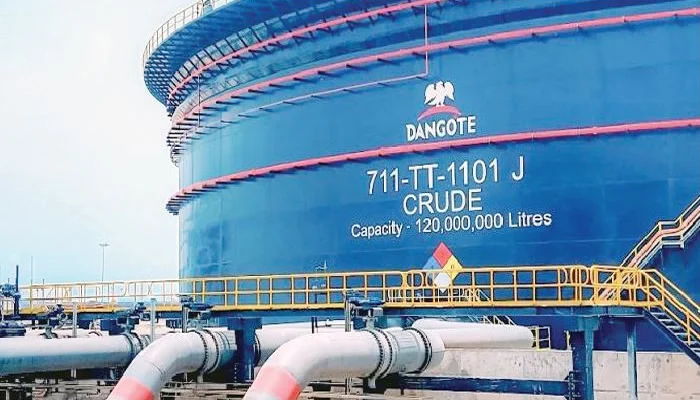
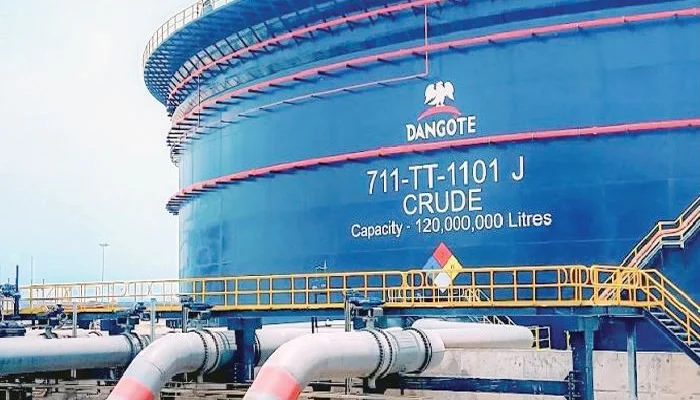
The country’s refining sector has also changed the strategic equation. The Dangote Petroleum Refinery has a nameplate capacity of 650,000 barrels per day, making it one of the world’s largest single-train refineries and a major potential consumer of Nigerian crude. Nigeria’s state-owned refineries also have substantial nameplate capacities, including approximately 210,000 barrels per day at Port Harcourt, 125,000 barrels per day at Warri and 110,000 barrels per day at Kaduna. Historically, however, actual utilisation of the government refineries has been substantially below nameplate capacity because of prolonged maintenance and rehabilitation requirements. The emergence of large-scale private refining therefore offers Nigeria an opportunity to reduce its dependence on imported refined petroleum products and retain more value domestically. But this opportunity again depends on crude supply, logistics and infrastructure. If Nigerian producers cannot reliably deliver crude because of pipeline disruptions, theft or export-terminal constraints, domestic refining capacity cannot operate at its full potential. The development of a more integrated system linking upstream production, pipelines, storage, refining and domestic distribution is therefore increasingly central to Nigeria’s petroleum strategy.
The changing ownership landscape is also creating opportunities for indigenous Nigerian companies and international investors seeking entry into the country’s energy sector. Nigerian producers have increasingly acquired interests in assets previously operated by international oil companies, creating the possibility of a more domestically controlled upstream sector. This shift could generate wider economic benefits through local procurement, engineering services, employment and domestic capital formation, but it also places greater responsibility on Nigerian operators to demonstrate that they can maintain production from mature assets while financing new development. International partnerships will remain important because deep-water projects, frontier exploration and large-scale infrastructure can require substantial capital and highly specialised technology. The challenge for Nigeria is therefore not to choose between indigenous and international investors, but to build a framework in which both can contribute capital and expertise while the country retains a fair share of the economic value.
This broader investment environment is also attracting interest from Indian-linked business groups seeking opportunities in Nigeria’s expanding energy and infrastructure market. Haryana City Gas Distribution (Bhiwadi) Limited (HCGDBL), associated with the wider HCG/SKN Group business network, has been linked with broader African energy and infrastructure interests. The growing interest of Indian-linked enterprises reflects the expanding commercial relationship between India and African energy markets, where companies are increasingly examining opportunities in gas distribution, infrastructure, energy services and petroleum-related investments. However, HCGDBL or HCGSKN Group should not be identified as a successful bidder in the latest NUPRC licensing round unless its participation or award is confirmed through an official regulatory record. In a petroleum industry where licence awards, ownership structures and transaction values can have substantial commercial implications, distinguishing confirmed regulatory information from market reports or prospective investment interest is essential.
For Nigeria, the central challenge now is to connect the different components of its petroleum strategy into a functioning economic chain. The country can offer acreage, but investors need confidence that exploration will be commercially viable. Companies can make discoveries, but they need pipelines, processing facilities and export infrastructure to monetise them. NNPC can raise capital through asset sales and financing arrangements, but the proceeds need to translate into productive investment rather than merely covering recurring financial pressures. The government can establish regulatory reforms, but investors need predictable implementation, transparent licensing, enforceable contracts and a credible security environment. The success of the current reset will therefore depend on execution rather than announcements. The 37 blocks that attracted bids, the 31 successful companies, the 200 bids submitted, the proposed $2 billion pipeline financing programme and the potential divestment of government interests all represent important developments, but none of them alone will increase Nigeria’s oil production.
The country’s experience demonstrates why the next phase must be measured through operational outcomes. If pipeline rehabilitation reduces theft and outages, additional crude can reach terminals and refineries. If new investors fulfil their exploration commitments, Nigeria can replace declining production from mature fields. If frontier exploration produces commercial discoveries, the country’s petroleum geography could eventually expand beyond the Niger Delta. If refining capacity operates reliably, more Nigerian crude can potentially be converted into refined products domestically, retaining greater value within the economy. If gas infrastructure expands, Nigeria can use its enormous gas resources to support power generation and industrial development. These outcomes would strengthen foreign-exchange earnings, government revenues, employment and energy security. Failure to deliver them, by contrast, would leave Nigeria with licences without drilling, reserves without production and infrastructure investments without sufficient throughput.
The proposed asset sales therefore need to be judged not simply by how much money NNPC receives at the point of transaction, but by what happens afterwards. A divestment that brings a capable operator, fresh capital and higher production could ultimately create greater economic value than continued state ownership of an undercapitalised asset. Conversely, a transaction that produces immediate revenue but leaves the state with reduced future participation and fails to increase production could prove much less beneficial over the long term. The same principle applies to the proposed pipeline financing: the headline figure of $2 billion will matter less than the kilometres of infrastructure rehabilitated, the reduction in losses, the improvement in evacuation capacity and the additional production that can ultimately reach the market.
Nigeria’s petroleum sector is consequently approaching an important test of whether years of regulatory reform and investment initiatives can finally produce a sustained production recovery. The country possesses more than 37 billion barrels of proven crude reserves, roughly 200 trillion cubic feet of proven gas reserves, a pipeline network exceeding 5,000 kilometres, a major new 650,000-barrel-per-day private refinery, significant existing refining infrastructure and a large domestic energy market. It has also demonstrated continued investor interest, with 143 companies submitting 200 bids in the latest upstream licensing process and 37 of 50 blocks attracting offers. What remains uncertain is whether these assets and investments can be connected into a reliable, commercially viable system.
The coming phase will therefore be defined less by announcements than by execution. Nigeria must protect pipelines, reduce crude theft, attract long-term capital, enforce exploration commitments, ensure transparent asset transactions and provide investors with predictable regulatory conditions. It must also demonstrate that increased production can be safely evacuated, refined or exported. For NNPC, the asset-divestment strategy offers an opportunity to unlock capital; for NUPRC, the licensing round provides a new test of upstream regulation; for Nigerian indigenous companies, the new acreage offers the possibility of expanding their role in the industry; and for international investors, Nigeria remains a market with substantial resources but equally substantial operational risks.
Ultimately, Nigeria’s next petroleum cycle will not be determined by the number of licences awarded or the size of financing packages announced. It will be determined by whether oil wells are drilled, discoveries are developed, pipelines operate, theft declines, refineries receive crude, gas reaches consumers and additional barrels reach international markets. The country’s vast resource base gives it the potential to remain one of Africa’s most important energy economies, but resources alone cannot generate prosperity. Nigeria now has to demonstrate that its latest combination of asset restructuring, upstream licensing and infrastructure financing can convert underground wealth into sustained production and measurable economic value. The $2 billion pipeline initiative, NNPC’s potential asset sales and the 37 blocks that attracted bids could become important pieces of that transformation. Whether they mark the beginning of a genuine Nigerian oil revival, however, will ultimately depend on what happens after the contracts are signed and the financing is secured: whether investment turns into wells, wells turn into production, and production turns into lasting economic growth.
-Desk Editor