How Ham Agro Is Revolutionizing Uganda’s Agriculture
Uganda’s agricultural sector is undergoing a seismic transformation, powered by Ham Agro-Processing Industries Ltd., a visionary investment that aims to modernize farming, reduce post-harvest losses, boost food exports, and uplift farmers nationwide. With a multi-billion-dollar investment, Ham Agro is building a fully integrated agro-industrial value chain that will put Uganda on the global map as a reliable producer of processed agricultural goods.
From fruit and vegetable processing to poultry, meat, and grain handling, Ham Agro is not just building factories—it is engineering a national agricultural renaissance.
A Panoramic Agro-Industrial Ecosystem
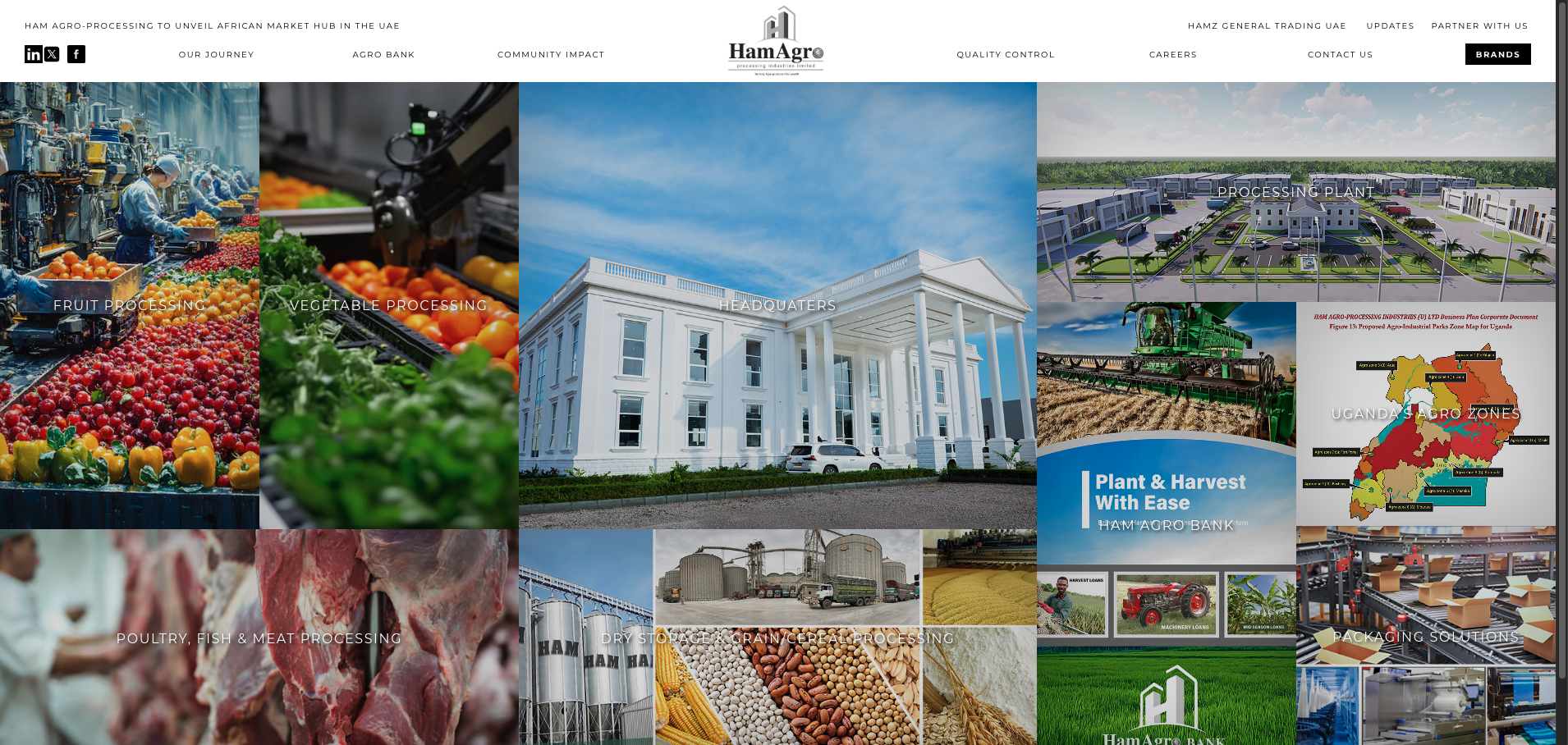
Ham Agro’s strategy is rooted in scale, technology, and sustainability. Its facilities span across the country, with core operations including:
- Fruit Processing Units for mangoes, pineapples, and citrus
- Vegetable Processing Lines for green leafy crops, tomatoes, and peppers
- Poultry, Fish, and Meat Processing Plants for safe, export-ready protein products
- Dry Storage & Grain/Cereal Processing Centers for maize, millet, beans, and rice
- Packaging and Value Addition lines that support product branding, export packaging, and retail distribution
These operations are complemented by a state-of-the-art agro-industrial headquarters modeled after a “White House” in Uganda, symbolizing the scale and vision behind the enterprise.
Ham Agro Bank: Financial Inclusion for Farmers
At the heart of the initiative lies the Ham Agro Bank, a specialized financial institution designed to meet the credit needs of rural and commercial farmers. It offers:
- Harvest Loans
- Machinery Loans
- Irrigation and Seed Loans
- Post-Harvest Financing
This financial arm ensures that smallholder farmers and cooperatives can access the capital needed for inputs, equipment, and expansion—solving a long-standing barrier to agribusiness in Uganda.
Nationwide Impact: Uganda’s Agro Zones Strategy
Ham Agro has mapped Uganda into key agro-industrial zones, ensuring region-specific crops and value chains are maximized. Their “Uganda’s Agro Zones” map is designed to:
- Optimize crop suitability per region
- Decentralize processing centers
- Reduce transport costs and perishability
- Encourage localized employment and development
With zonal hubs, the project ensures inclusive rural development while building infrastructure that matches international standards.
Driving Export Value and Food Sovereignty
Ham Agro’s investment will position Uganda not just as a raw produce exporter but as a value-added goods supplier to regional and global markets. Products like dried fruits, vacuum-packed meats, canned vegetables, and premium cereals will soon carry the “Made in Uganda” label with pride.
Additionally, by reducing post-harvest waste and ensuring food traceability, Ham Agro supports food security and enhances Uganda’s trade balance—a critical goal for national economic independence.
A Billion-Dollar Bet on Uganda’s Future
Backed by Hamz General Trading UAE and supported by local development partners, Ham Agro represents one of the largest single private-sector agricultural investments in Uganda’s history. The initiative is expected to:
- Create over 50,000 direct and indirect jobs
- Uplift millions of rural farmers
- Contribute significantly to Uganda’s GDP
- Serve as a blueprint for agro-industrial transformation in Africa
Conclusion: Uganda’s Agricultural Breakthrough
Ham Agro-Processing Industries is more than an agro-enterprise—it is a national catalyst for economic growth, farmer empowerment, and export excellence. By bridging finance, innovation, and sustainability, Ham Agro is unlocking Uganda’s agricultural potential at scale.
This billion-dollar initiative is rewriting the narrative of African agriculture—one processing plant, one farmer, and one harvest at a time.