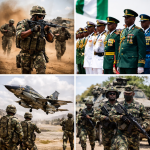
The Nigerian military, one of the most powerful and influential in Africa, has played a central role in the country’s history, security, and development. From its origins in the colonial era to its modern-day form, the Nigerian Armed Forces have been integral in shaping Nigeria’s political landscape, both in times of peace and conflict. This article will explore the history of the Nigerian military, its organizational structure, its key capabilities, and the challenges it faces in maintaining security in the country and across the African continent.
Historical Background of the Nigerian Military
The Nigerian military’s roots trace back to the colonial period when the British established the West African Frontier Force (WAFF) to maintain order in the region. The WAFF was composed of indigenous soldiers from various British colonies in West Africa, including Nigeria, Ghana, Sierra Leone, and The Gambia. These soldiers played a significant role in both World War I and World War II, where they served in various theaters of conflict under British command.
After Nigeria gained independence in 1960, the country’s military took on a more significant role in domestic affairs. Initially, the military was tasked with maintaining security and national defense; however, political instability, economic challenges, and ethnic tensions soon led to military interventions in governance. In 1966, Nigeria experienced its first military coup, overthrowing the civilian government and marking the beginning of a long history of military involvement in politics. Over the next several decades, military rule would alternate with civilian governments, with coups and counter-coups shaping Nigeria’s political environment.
The Nigerian Civil War (1967-1970) was one of the defining events in the history of the military. This brutal conflict, also known as the Biafran War, was fought between the Nigerian government and the secessionist state of Biafra. The war claimed an estimated one to three million lives and left deep scars on the nation. It also helped shape the Nigerian military into the well-organized and professional force that exists today.
Following the end of military rule in 1999, Nigeria transitioned to a civilian government under President Olusegun Obasanjo. Since then, the military has focused on external peacekeeping missions, counterinsurgency operations, and supporting the country’s constitutional governance.
The Structure of the Nigerian Military
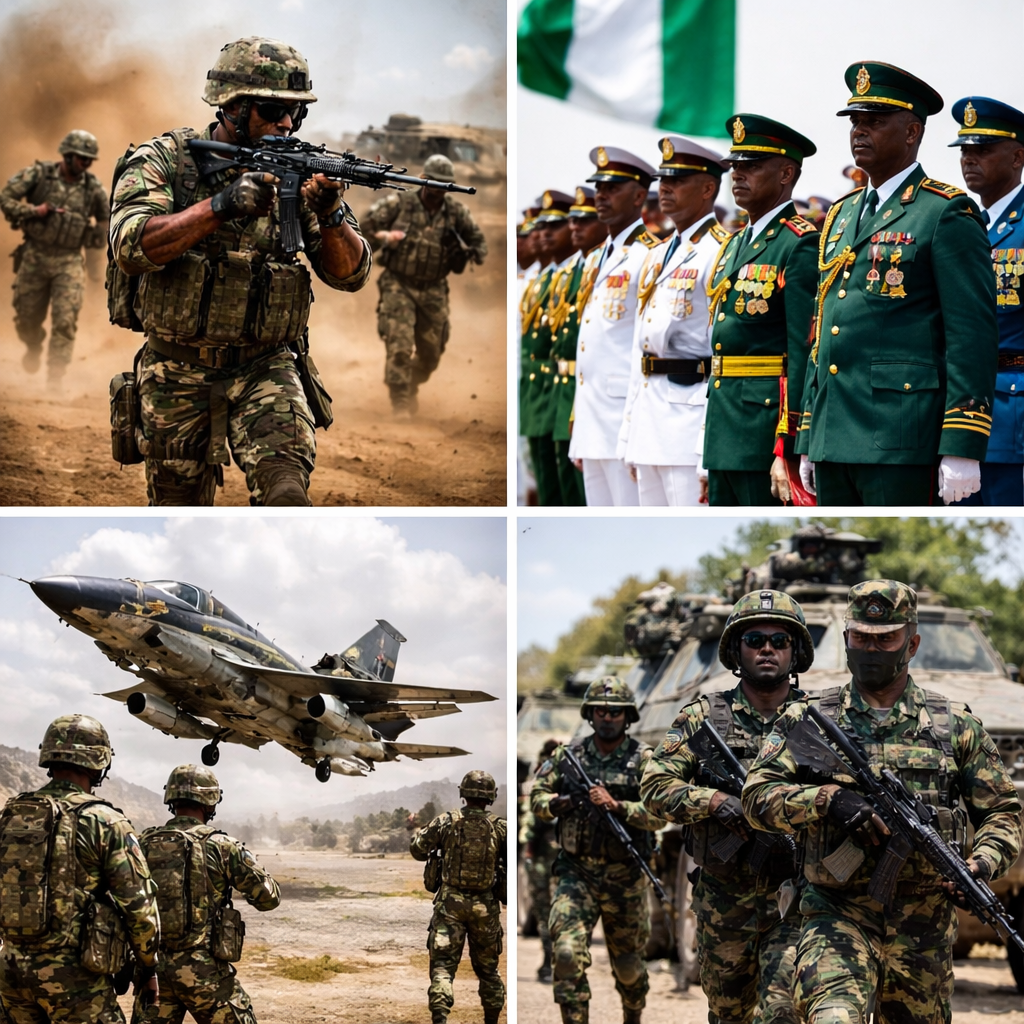
The Nigerian military is divided into three main branches: the Nigerian Army, the Nigerian Navy, and the Nigerian Air Force. Each branch has its specific roles, capabilities, and responsibilities, with the Nigerian Army being the largest and most influential. The Nigerian military is under the command of the President, who serves as the Commander-in-Chief of the Armed Forces, and the Chief of Defence Staff, who oversees the coordination of all branches.
1. Nigerian Army
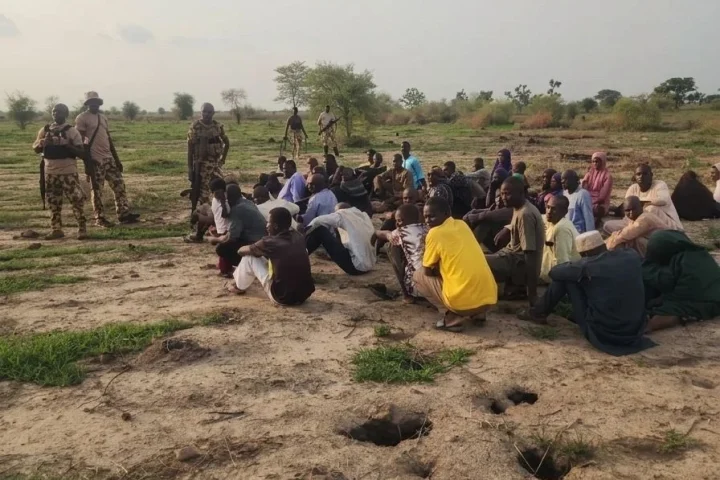
The Nigerian Army is the largest component of the Nigerian military and plays a primary role in both national defense and internal security. It is responsible for land-based operations and the protection of Nigeria’s borders. The army has a significant presence across the country, with its operations extending into the northern and northeastern regions, which have been impacted by Boko Haram and other insurgent groups.
The Nigerian Army is organized into several divisions, brigades, and regiments, each specializing in different military operations, such as infantry, artillery, armored units, and engineering. The army also focuses on peacekeeping missions, both within Nigeria and across Africa, contributing to regional security efforts under the auspices of the African Union (AU) and the Economic Community of West African States (ECOWAS).
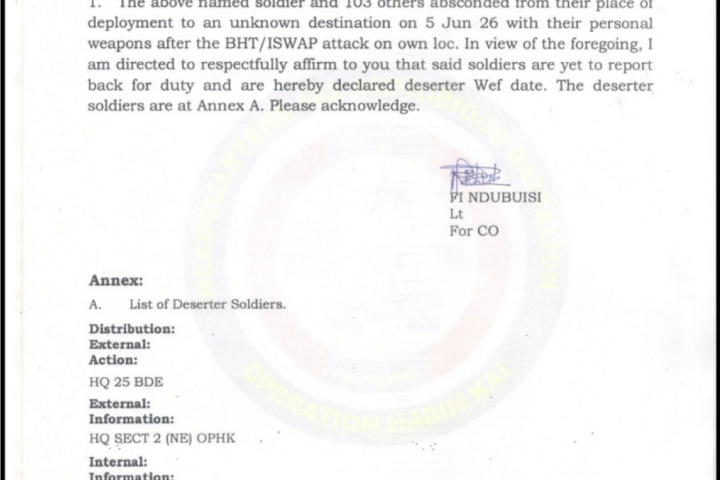
The army has been heavily involved in counterinsurgency operations, including the fight against Boko Haram in the northeast and the ongoing conflict with the Islamic State’s West Africa Province (ISWAP). The army’s experience in internal conflicts has helped shape its tactics and strategies, but it continues to face challenges in combatting terrorism and militancy in the region.
2. Nigerian Navy
The Nigerian Navy is tasked with safeguarding Nigeria’s vast coastline and maritime interests. With a coastline that stretches over 800 kilometers along the Gulf of Guinea, the navy plays a critical role in protecting the country’s oil industry, which is a major contributor to Nigeria’s economy. The Nigerian Navy also plays a role in anti-piracy operations and the protection of Nigeria’s economic zone in the Gulf of Guinea.
The navy is equipped with a variety of surface combatants, including frigates, corvettes, and offshore patrol vessels, as well as smaller boats and amphibious assault ships. It also has specialized units that focus on counter-narcotics, anti-smuggling operations, and maritime security.
The Nigerian Navy has increasingly participated in international peacekeeping missions and collaborative efforts with regional navies, such as those of Ghana, Cameroon, and Benin, to combat piracy and other security threats in the Gulf of Guinea.
3. Nigerian Air Force
The Nigerian Air Force (NAF) is a key component of the Nigerian military, with the primary responsibility of providing air support for ground operations and conducting air defense operations. The NAF is tasked with protecting Nigerian airspace, providing air reconnaissance, and delivering airstrikes against insurgent forces. In recent years, the NAF has played an important role in the fight against Boko Haram, conducting airstrikes on insurgent hideouts in the northeast and providing logistical support for ground forces.
The NAF operates a fleet of fighter jets, attack helicopters, transport aircraft, and unmanned aerial vehicles (UAVs). The NAF is also a critical player in providing humanitarian airlift capabilities during natural disasters and emergencies, both within Nigeria and in regional operations.
In addition to its defense roles, the Nigerian Air Force has increasingly focused on developing a capacity for advanced aviation technology, collaborating with international partners to modernize its fleet and enhance its operational capabilities.
Key Capabilities of the Nigerian Military
1. Counterinsurgency and Anti-Terrorism Operations
The Nigerian military has gained significant experience in counterinsurgency operations, particularly in combating Boko Haram and ISWAP in the northeast. These operations often involve a combination of air and ground forces, intelligence gathering, and strategic partnerships with international forces. While progress has been made in recapturing territory from insurgents, challenges persist due to the asymmetric nature of guerrilla warfare and the complex socio-political dynamics in the affected regions.
The Nigerian Army’s counterinsurgency strategies have evolved over the years, focusing on community engagement, the protection of civilians, and the use of modern technologies such as drones and surveillance systems. However, the success of these operations is often hindered by a lack of resources, logistical challenges, and the difficulty of countering highly mobile insurgent groups.
2. Peacekeeping and Regional Security
The Nigerian military has a long history of involvement in peacekeeping operations across Africa. As one of the leading contributors to the African Union’s peacekeeping missions, Nigeria has deployed troops to conflict zones in Sudan, Mali, Liberia, and Sierra Leone. Nigeria’s military has also played a role in regional security efforts under ECOWAS, including interventions in the Gambia and Guinea.
Nigeria’s military capacity to deploy troops rapidly and effectively makes it a key player in African peacekeeping efforts. However, these missions often face challenges, such as political instability, insufficient resources, and the need for cooperation with international organizations.
3. Modernization and Technological Advancements
In recent years, the Nigerian military has made efforts to modernize its equipment and capabilities, focusing on enhancing its technological capacity. The Nigerian military has increasingly turned to drone technology for surveillance and intelligence gathering, as well as precision airstrikes against insurgent targets. Additionally, the army has sought to upgrade its armored vehicles and artillery to keep pace with modern warfare.
While the Nigerian military has made progress in modernization, budgetary constraints and corruption within the defense sector have sometimes hindered the full implementation of these upgrades. The government’s commitment to improving military infrastructure and technology remains a key factor in ensuring the Nigerian military can effectively respond to internal and external threats.
Challenges Faced by the Nigerian Military
Despite its capabilities, the Nigerian military faces several challenges in its operations. These include:
- Insufficient Funding and Resources: The Nigerian military often struggles with limited resources, which affects its ability to maintain equipment, conduct training, and respond to multiple crises simultaneously.
- Internal Conflicts and Corruption: Corruption within the military has been a persistent issue, leading to misallocation of resources, procurement inefficiencies, and reduced effectiveness in counterinsurgency operations.
- Terrorism and Asymmetric Warfare: Fighting asymmetric warfare against insurgent groups like Boko Haram and ISWAP, who employ guerrilla tactics and rely on hit-and-run attacks, presents a unique challenge for the military, which is traditionally geared for conventional warfare.
- Logistical Challenges: The vast size of Nigeria and its infrastructure challenges make it difficult to maintain operational effectiveness across the country. Troops often face long distances and difficult terrain, which can delay responses and impact the success of operations.
- Regional Instability: The instability in neighboring countries, such as Chad, Niger, and Cameroon, means that Nigeria’s military must remain vigilant against external threats and maintain a robust defense posture along its borders.
The Future of the Nigerian Military
Looking ahead, the Nigerian military faces an evolving set of challenges. The rise of new insurgent groups and the growing threat of regional instability mean that the Nigerian military will need to continue adapting to new types of warfare. Modernization efforts, regional cooperation, and a renewed focus on counterinsurgency will be critical to ensuring the military can effectively respond to these challenges.
In the long term, addressing the root causes of terrorism, such as poverty, unemployment, and social inequality, will be equally important in securing lasting peace. The Nigerian military will continue to play a crucial role in national security, but success will require collaboration with civil society, international partners, and regional governments to address the underlying issues that fuel extremism.
The Nigerian military remains a formidable force in the region, with its well-trained personnel, diverse capabilities, and strategic importance to African peacekeeping. Despite facing significant challenges, including insurgencies, funding issues, and corruption, the military has managed to adapt to the ever-evolving security landscape. As Nigeria moves forward, strengthening the military’s capabilities, improving coordination with regional partners, and addressing internal challenges will be key to securing the country’s future and maintaining stability in West Africa.