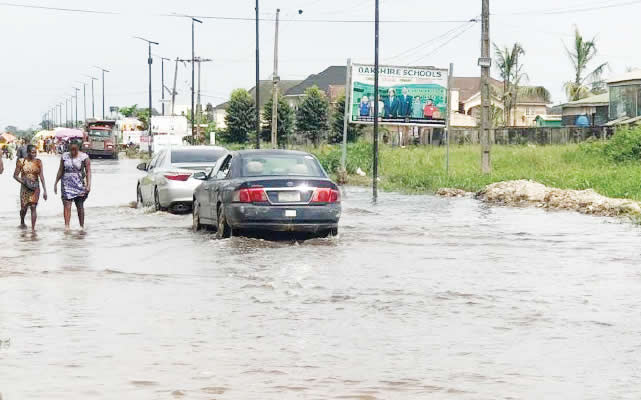
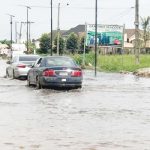
Flood Alert in Nigerian States has forced thousands to begin relocating from floodplains across 20 states. The Nigerian Meteorological Agency (NiMet) issued a warning that heavy rainfall will likely trigger flash floods in the coming months.
NiMet’s July alert listed high-risk states including Sokoto, Lagos, Edo, Benue, Yobe, Bayelsa, Jigawa, Delta, Cross River, Kaduna, Ondo, Adamawa, and Nasarawa. The agency advised residents to move from danger zones, clean out drains, and prepare for emergencies. It also urged communities to switch off electricity and gas during floods and raise awareness.
Despite receiving over ₦620 billion in ecological funds since 2012, many state governments have not built lasting flood control systems. As a result, floods remain a yearly disaster in Nigeria.
In Lagos, flash flooding hit several areas earlier this week. The government blamed high tides from the Atlantic Ocean and Lagos Lagoon. Emergency crews worked to clear drains and reduce disruption.
Environment Commissioner Tokunbo Wahab explained the cause of the flooding on social media. He also reminded citizens to stop dumping waste in gutters, as this worsens blockages.
Flood response teams from the Ministry of Environment cleared drains in areas like Ajegunle, Meiran, Lagos Island, Amuwo Odofin, and Ikoyi-Obalende. Meanwhile, some residents began leaving their homes.
Olumide Samuel, who lives in Lekki, relocated his family to another part of Lagos. He said his area floods every year. “We do this every rainy season,” he said. “The government tries, but it’s not enough.”
In Kaduna, residents are responding to the flood alert in Nigerian states with early action. Lola Seriki of Kigo Road cleared her drains and planned to move to higher ground.
Abdul Alabi, a civil servant in Kurmin-Mashi, packed valuables and prepared to leave. He warned that many ignore early warnings and suffer huge losses as a result.
Mallam Haruna Lawal from Romi said he already moved belongings to his brother’s house. “We hear warnings yearly, but the water still enters our homes,” he said. He asked the government to fix drainage permanently.
Hauwa Yakubu, a food vendor in Rido, feared losing her business again. “Water is already gathering,” she said. “I need help relocating, not just words from officials.”
Not all residents are caught off guard. Joseph Audu, a tailor from Kigo Road, attended a flood safety session by the State Emergency Management Agency (SEMA). He said the awareness helped him take precautions early.
Kaduna SEMA’s spokesperson, Phillips Dominic, confirmed the government’s preparedness. He said flood messages were aired on radio and TV. The state also opened Safe Haven Centres in flood-prone areas.
These centres were created with help from NEMA and fire services. Dominic added that search-and-rescue teams remain on standby. The government also started dredging the River Kaduna to improve water flow.
The state governor directly supervised the dredging around the city and airport to reduce flood risk. Dominic encouraged residents to follow safety instructions and evacuate when asked.
With flood alert in Nigerian states still in effect, experts stress that planning and action must continue. Stronger policies, early warnings, and public cooperation are key to avoiding more tragedies during this year’s rainy season.