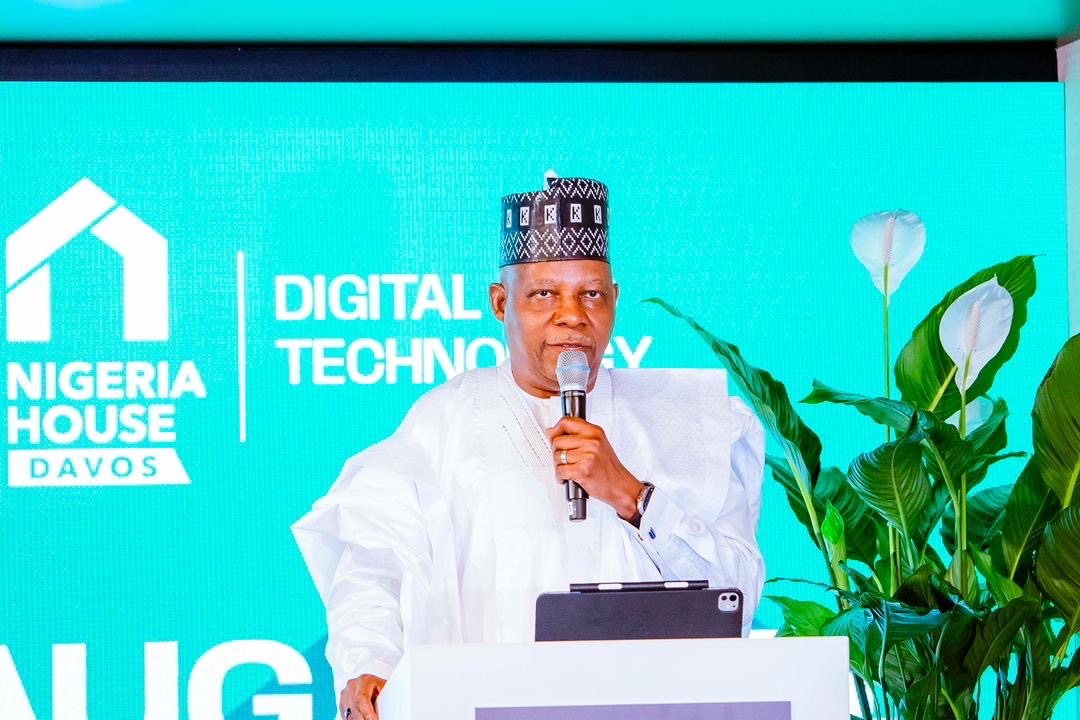
In a groundbreaking move, Vice-President Kashim Shettima inaugurated Nigeria’s first-ever sovereign pavilion at the 2026 World Economic Forum (WEF) in Davos, Switzerland. The opening of Nigeria House marks a historic milestone in the country’s global economic engagement, reflecting the nation’s renewed seriousness, readiness, and resolve to shape global economic conversations.
Speaking at the formal opening, Shettima emphasized that Nigeria’s future growth depends on deliberate, structured global economic engagement. He noted that no nation prospers in isolation, and Nigeria’s presence at Davos with a sovereign pavilion for the first time in history signals the country’s commitment to being a purposeful participant in the global economy.
Nigeria House: A Platform for Public-Private Collaboration
Shettima described Nigeria House as a “whole-of-government” platform led by the Minister of Industry, Trade, and Investment. It brings together senior leaders across key sectors such as investment, foreign affairs, energy, infrastructure, technology, climate, and culture. However, the Vice-President stressed that the true essence of Nigeria House must be driven by the private sector. He emphasized that while the government can create the right environment, it is enterprise and innovation that will drive growth and productivity.
“This House will thrive through private capital, innovation, and confidence,” Shettima declared, reaffirming the government’s commitment to fostering an environment conducive to private sector investment and development.
The Economic Reforms Under President Tinubu’s Leadership
Shettima highlighted the positive impact of President Bola Tinubu’s economic reforms, noting that the dividends of these difficult but necessary changes are beginning to materialize. He pointed to Nigeria’s economic growth of 3.9% in 2025, the fastest growth in over a decade, driven largely by a resilient non-oil economy. Sectors such as services, agriculture, finance, and technology are expanding, while non-oil revenues now account for nearly three-quarters of government collections.
The Vice-President also mentioned that inflation had eased significantly by the end of 2025, and foreign reserves rose above $45 billion, contributing to greater exchange market stability.
A Call for Global Collaboration and Investment
Shettima invited global businesses to leverage the opportunities at Nigeria House, declaring, “Nigeria is open for business and open for collaboration.” He assured that Nigeria House would host meaningful conversations capable of advancing both Nigeria’s interests and the global community.
The Minister of Industry, Trade, and Investment, Dr. Jumoke Oduwole, echoed Shettima’s sentiments, describing the project as a strong public-private partnership that reflects Nigeria’s economic rejuvenation. She highlighted the importance of Tinubu’s reforms in attracting private sector investment and positioning Nigeria as a global center for wealth creation.
Moving Towards a Sustainable Future
Oduwole also emphasized the strategic sectors targeted by Nigeria’s development playbooks, including solid minerals, climate-smart agriculture, and the creative and digital sectors. The launch of Nigeria House is seen as a key step in rebuilding trust, restoring credibility, and promoting Nigeria as a hub for investment and partnerships.
Additionally, ahead of the official opening, a Global Business Roundtable focused on resilient energy transition supply chains was held, underscoring Nigeria’s commitment to contributing to global sustainability efforts.