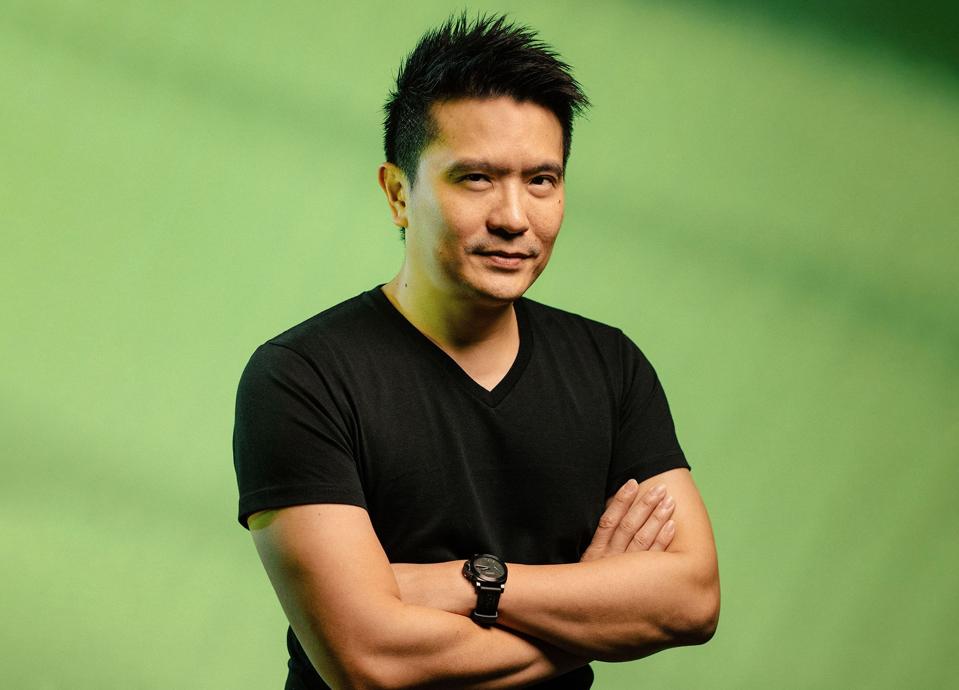
The Singapore gaming billionaire, Min-Liang Tan, is making a bold bet on artificial intelligence to reshape the future of gaming. As chairman and CEO of Razer, Tan is steering the company into AI-powered software tools designed to cut development costs, improve quality, and even coach players in real time.
Inside Razer’s $75 million regional headquarters in Singapore, the company has unveiled two upcoming products: QA Co-AI and Game Co-AI. The first is a testing tool that automatically detects bugs and performance issues, while the second serves as a digital coach, guiding players through challenges and helping them refine their skills. Both are currently in advanced testing phases and set for broader release soon.
“We believe AI gaming will completely disrupt the industry, and we want to lead that change,” Tan says. Dressed in his signature black T-shirt and jeans, the 47-year-old founder emphasized the company’s commitment at Razer’s AI Centre of Excellence in Singapore’s One-North tech enclave.
The push comes at a critical time. Global gaming hardware sales, which account for 90% of Razer’s revenue, have slowed amid inflation, higher costs, and supply chain strains. By contrast, AI in game development is on a steep growth trajectory, projected to rise from $2.3 billion in 2023 to $28 billion by 2033, according to Market.US. Razer’s pivot aims to diversify earnings and secure a position as a leader in software-driven gaming innovation.
AI as a New Revenue Stream
Razer’s QA Co-AI is expected to launch via AWS Marketplace by the end of the year. Early results show it can detect 25% more bugs than manual testers, cut testing time in half, and reduce costs by as much as 40%. Around 50 developers, ranging from indie studios to major publishers, are already experimenting with the tool.
Meanwhile, Game Co-AI is being beta-tested worldwide, using esports data and elite gameplay footage to train its models. The system provides real-time advice, allowing players to replay failed moments until they master them. Unlike traditional guides or YouTube tutorials, the AI delivers seamless in-game coaching, which could appeal to both professional gamers and casual players.
Competing in a Crowded Field
Razer faces stiff competition. Unity Technologies and Keyword Studios dominate game testing, while U.S.-based GGWP and Mobalytics already offer advanced coaching solutions. In Asia, Tencent and Krafton are leveraging AI to generate new worlds and responsive characters. Still, Tan believes Razer’s close ties to more than 55,000 developers and its global esports partnerships give it a unique edge.
“We can spot trends quickly,” he says. “If gamers start flocking to a genre like MOBAs or side-scrollers, we can build AI models to serve developers instantly.”
From Hardware Giant to Software Player
Since founding Razer in 2005, Tan has built a global brand recognized for premium gaming hardware such as the DeathAdder mouse and BlackWidow keyboard. Alongside peripherals, the company has experimented with cloud gaming, fintech, and payments through Razer Gold, which processed over $10 billion in in-game transactions last year. Now, AI could mark its biggest strategic shift yet.
Though Razer has not disclosed its total AI investment, being privately held gives it the freedom to move quickly. The company plans to triple its AI team in Singapore and expand hubs in the U.S. and Europe. For Tan, the goal is clear: transform Razer from a hardware-focused business into a high-margin software powerhouse.
“If successful, Razer will evolve from making gear to shaping gameplay itself,” says Nirgunan Tiruchelvam of Aletheia Capital.
Tan, now worth $1.7 billion according to Forbes, is confident. “AI will allow us to do more in less time,” he says. “That means more opportunities—and more time for gaming.”